
Twenty-three years ago my dad, brother, kids, and I joined a big-bus tour of central Europe. One of our stops was the city of Prague, capital of Czechia, where we spent two nights. I always hoped to return and explore it more fully. Recently I did.
My first stop was Tourist Central—Prague’s Old Time Square. At 8 a.m the streets were pleasantly empty, except for a few delivery trucks and street sweepers.
The square, one of Europe’s grandest, is surrounded by architectural masterpieces of every style. Prague escaped much of the continent-wide destruction of World War II.
Some of the more prominent buildings on the square were built in the 1300s, such as the Old Town Hall and the Church of Our Lady before Týn. Saint Nicholas Church was constructed on the site of a previous church, dating to the 1200s. Toward the end of World War II, Saint Nick’s was the underground home of Radio Prague.

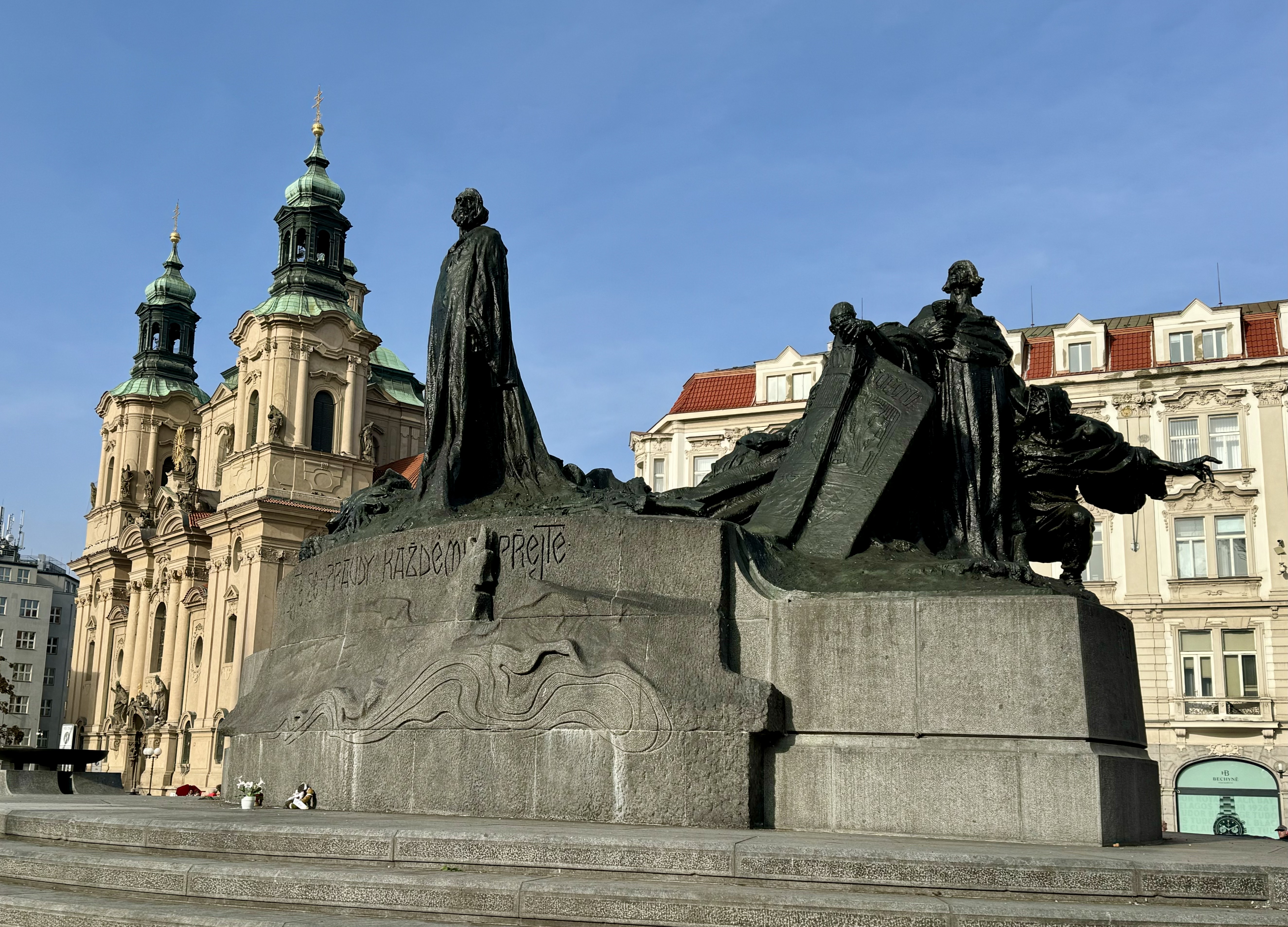
In the center is the enormous memorial to Jan Hus, a theologian and preacher whose ideas about reforming a corrupt church predated Martin Luther by a hundred years. Hus’s accusations, however, were poorly received by the church hierarchy. He was burned at the stake in 1415.
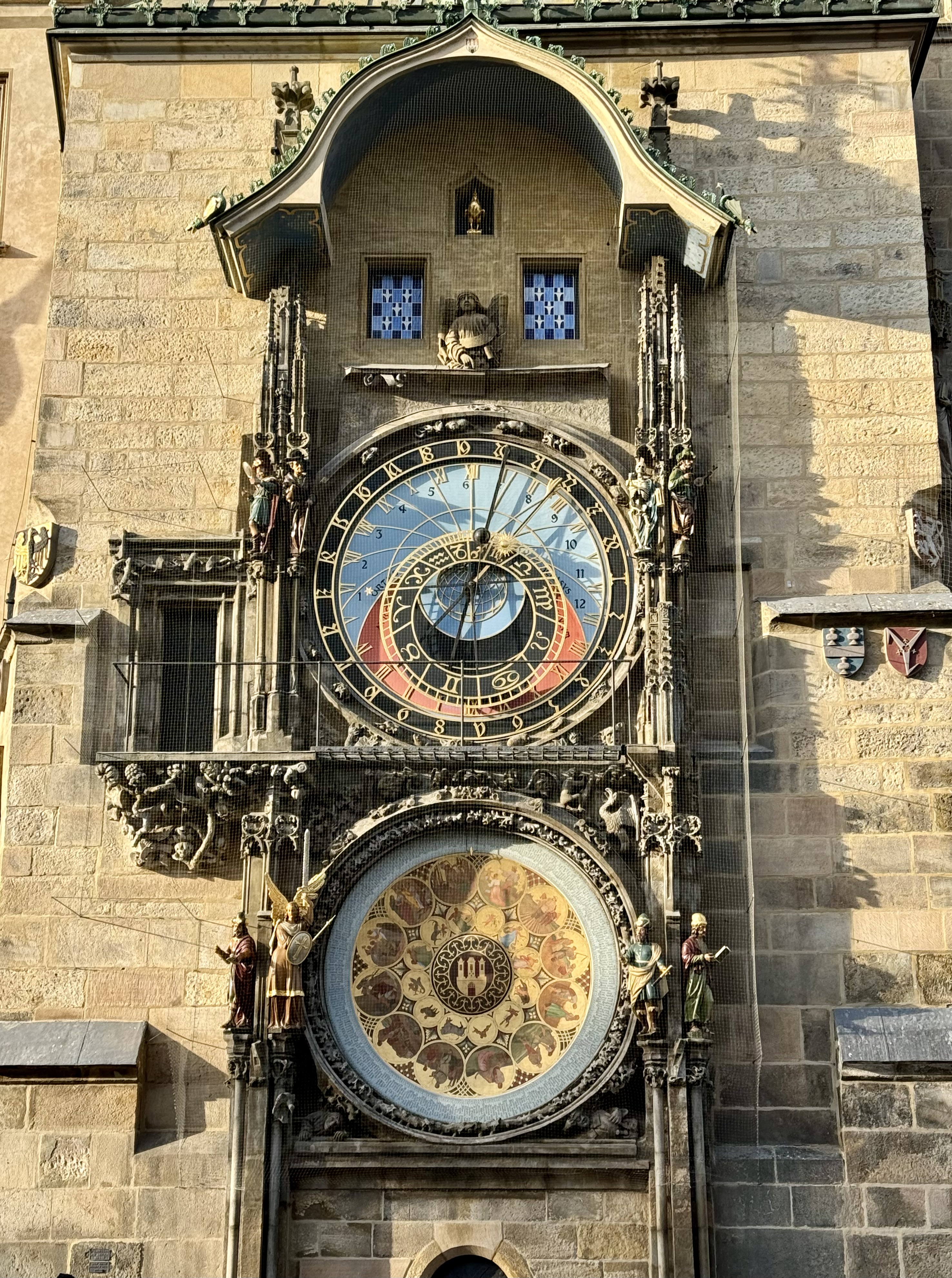
The big draw in the square is the marvelously complex clock, installed on the side of the Old Town Hall in 1410.
The clock has two huge faces surrounded by animated figures representing vanity, lust, greed, and death. The apostles put in an appearance every hour and a golden rooster crows.
But shortly after its unveiling the clock was cursed—and stayed that way for most of a century.
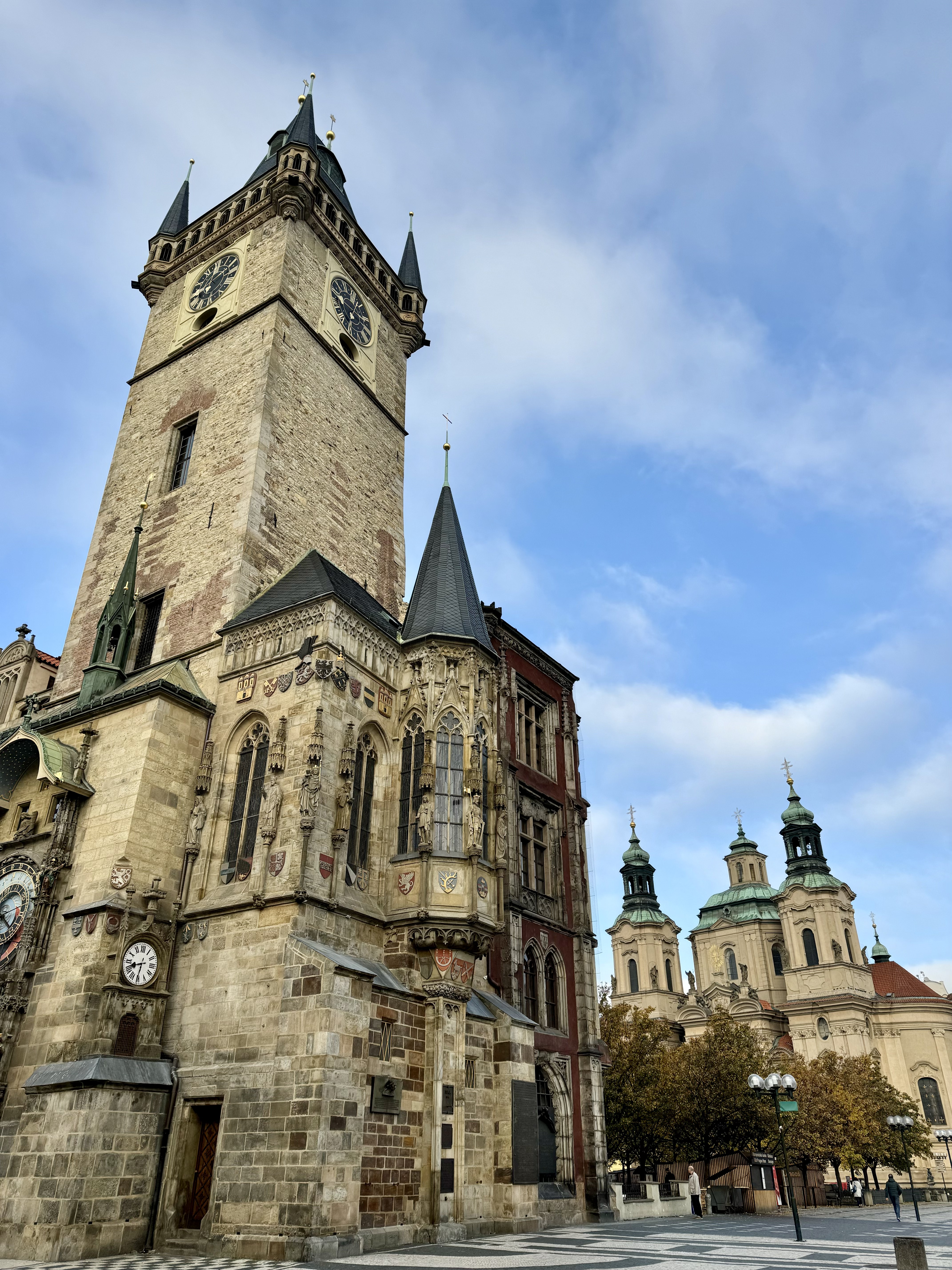
Saint Nicholas Church
The Prague astronomical clock was designed and built by Mikuláš of Kadaň. At its completion, Kadaň’s mechanism was considered such a masterpiece that many nations approached him to replicate the work. Concerned that Kadaň would build bigger and more impressive clocks for other countries, Prague’s city council struck preemptively. They ordered the clockmaker’s eyes blinded with a red-hot poker.
Driven mad by the mutilation, Kadaň sought revenge. Some claim he threw himself into the clock’s complicated guts, disabling the workings and committing suicide at the same time. His death and the lack of alternative expertise stopped the clock for decades.
Eighty years later, a clockmaker named Jan Růže defied the jinx. He fixed the clock and even made some enhancements.
One dial indicates the position of the sun, the phase of the moon, and the times of sunrise and sunset in three different systems of timekeeping. The other dial relates the days of the year, the signs of the zodiac, and the dates of fixed holidays. The figure of death strikes the time of day.
The Prague astronomical clock is the third-oldest in the world and the oldest one still working.
On the square
Good King Wenceslas looked out, on the Feast of Stephen.
In Prague, the good king and his bronze horse look out instead upon Wenceslas Square, a broad boulevard that has witnessed much of modern Czech history.
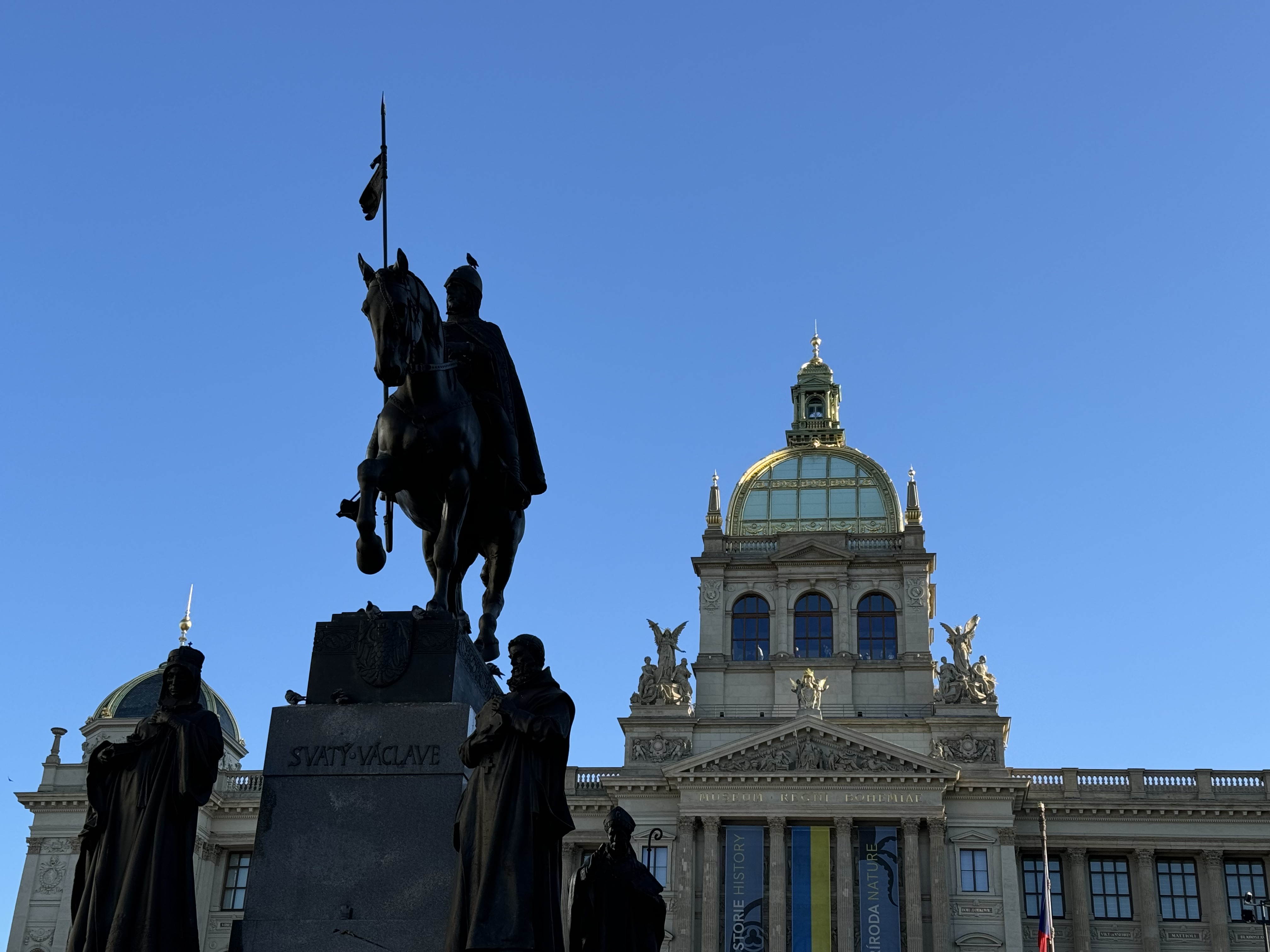
Despite the Christmas carol, Wenceslas was a prince, not a king. He was the ruler of Bohemia from 921 until he was assassinated in his mid-twenties. However, Wenceslas was good. He was generous in providing support to widows, orphans, and the homeless. He founded a church on the site of the present-day Saint Vitus Cathedral, where his sword and helmet are now on display.
Posthumously Wenceslas was declared both a king and a saint. The melody of the Christmas carol is Finnish from the 1200s. The lyrics were written in 1853 by an English priest.

In the Middle Ages a square in the center of Prague served as a marketplace for buying and selling horses. The space was renamed Wenceslas Square in 1848. When the Austro-Hungarian Empire broke apart following World War I, three of its regions were combined into one new country—Czechoslovakia. In October 1918, Wenceslas Square was the site of the new country’s celebration—its Fourth of July.
Thousands of citizens gathered around the statue and listened as the declaration of independence was read aloud. Symbols of the Austro-Hungarian monarchy were removed from public buildings and ripped from the uniforms of the military.

The fledging country’s independence lasted for all of twenty years.
Then, in 1938, the Nazis cut a deal with the Allies to take control of Czechoslovakia’s border areas. The pact was called the Munich Agreement. In Czechoslovakia it was called the Munich Betrayal.
Wenceslas Square became the site of massive demonstrations against Nazi occupation. Soon, however, the country found itself a puppet state of Germany. Tens of thousands of Czech Jews and Roma were railroaded to death camps. The primary perpetrator was Reinhard Heydrich, chief of the SS, who was stationed in Prague. (More about him later.)
Velvet resistance
Following World War II, the Soviets replaced the Nazis as occupiers. Same puppet state, new puppet master. For more than forty years, Czechoslovakians had no say in their governance. The Soviets clamped down on personal freedoms. Tens of thousands of dissidents were persecuted.
In 1968, the Czechs, led by Alexander Dubček, began tiptoeing toward democracy. This period of political and economic reform was called Prague Spring. Eight months later, the Soviet Union woke up to what was transpiring under their noses and invaded the country with two hundred thousand troops and five thousand tanks.
A wave of protests in Wenceslas Square and elsewhere vented anger, but accomplished nothing.
Czechoslovakian Jaromír Jágr, a National Hockey League Hall of Famer, wore number 68 throughout his career in honor of the Prague spring movement. His grandfather, imprisoned for opposing the Soviets, died in that year.
Twenty more years of repression followed. Then, in 1989, the next generation of protesters demanded freedom. Hundreds of thousands of pro-democracy students and artists began filling Wenceslas Square. Václav Havel, a poet and playwright, led the mostly peaceful protests from a balcony overlooking the boulevard.
The timing was fortuitous. The communist regime was hugely unpopular, the Soviets were softening their stance, and a few days earlier the Berlin Wall had fallen. After days of huge rallies in the square, the Soviet Union caved to Czech demands. Soon after, Havel was elected president.
The last Soviet troops left the country in 1991. The Velvet Revolution had succeeded.
Cold War Museum
Fallout
During World War II, an errant bomb created an empty lot on Wenceslas Square. The incoming Soviet occupiers, rattled by the specter of nuclear war, saw an opportunity. For the benefit of their ruling elite, they built an underground fallout shelter. The location was disguised beneath a new hotel.
The shelter, completed in 1958, was rediscovered in 1989. Today, the former bunker is the Cold War Museum, operated by the Association of the Czechoslovak Armed Forces.
I joined six others for a tour. A guide escorted us three levels beneath the lobby of the Jalta Hotel. We passed through heavy metal doors into a series of hidden rooms.

When operational, the shelter would have been stocked with canned food, bottled water, medical supplies, a radio, and a chemical toilet. Its sophisticated air-recycling system still works. The bunker could have accommodated up to 150 people for two weeks.
Today, most of the rooms recount various Cold War espionage and repression techniques, such as border control, prisoner interrogation, airspace tracking, and spying.
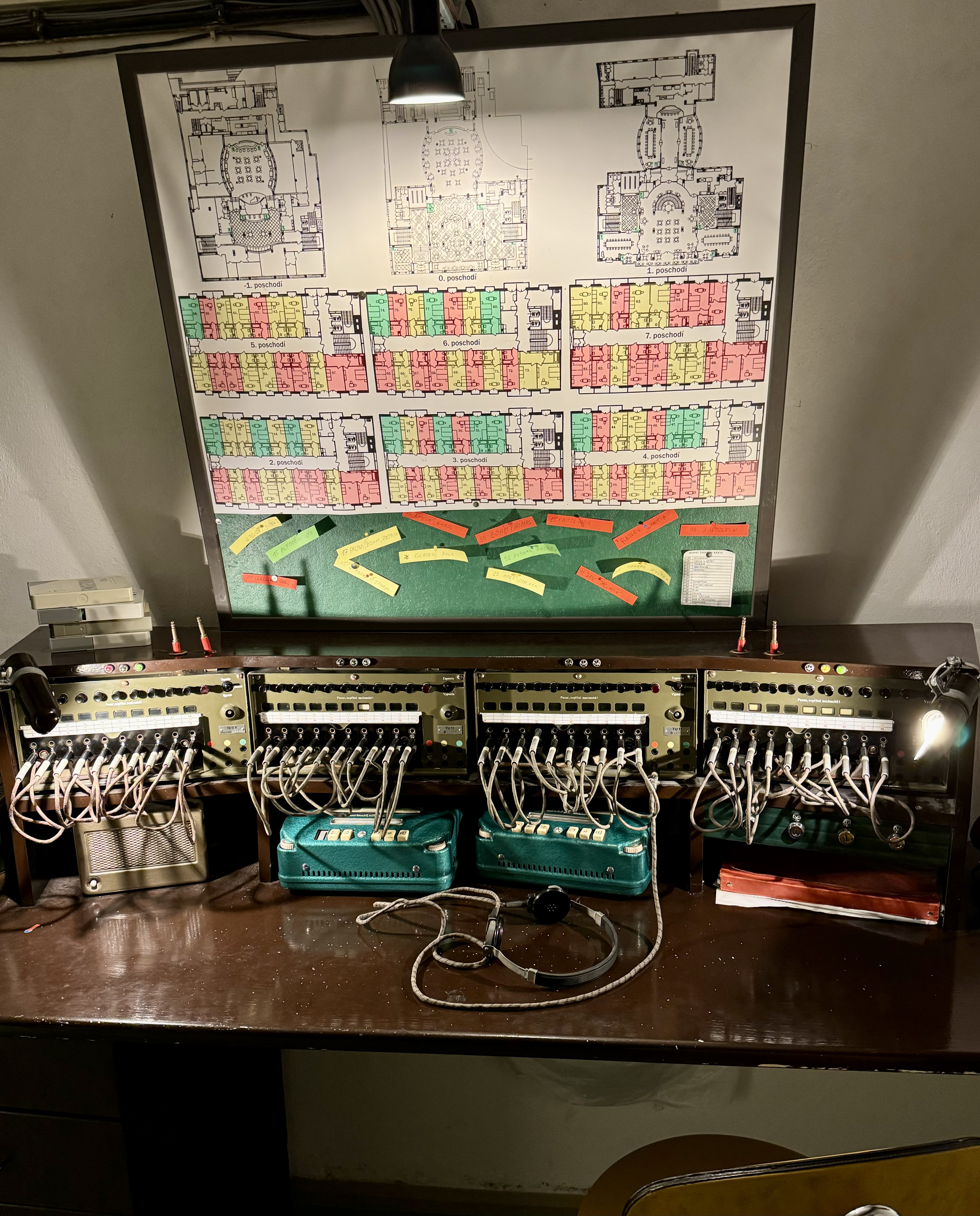
In the eavesdropping room is the original hotel switchboard, used by the secret police for listening and taping the phone calls and room conversations of Jalta Hotel guests. The hotel frequently hosted foreign dignitaries. Their in-room activities sometimes provided valuable, ahem, leverage.

Poster boy
Art nouveau, a decorative style of art popular between the late 1800s and early 1900s, is characterized by long, curvy lines and natural images. Alphonse Mucha, one of the artists best known for advancing the style, was frustrated to be identified with it.
Mucha was born in Czechia in 1860. Art patrons, recognizing his talent at an early age, supported him while he studied in Europe’s capitals. In 1888, Mucha moved to Paris. He became friends and shared a studio with impressionist painter Paul Gauguin. He joined a publisher’s stable of designers, illustrating books and magazines.
Then, in December 1894, a stroke of luck changed Mucha’s life.

Saint Vitus Cathedral
World-famous actress Sarah Bernhardt needed a poster to promote an upcoming performance. Due to the holidays, none of the printer’s usual designers were available. The assignment fell to Mucha.
His oversized poster of Bernhardt starring in the play Gismonda hit the streets of Paris in January of 1895 and created a stir.
Some copies were purchased by collectors. Others were stolen. The actress was so pleased with the response she signed Mucha to a long-term contract.
Mucha’s work for Bernhardt made him so famous, he was hired to design posters for chocolate, wine, holiday resorts, bicycles, and cigarette papers. Most of his designs feature willowy women with flowing hair, interwoven with flowers and vines.
Mucha’s timing was good. Due to improvements in printing technology, posters flourished as an art form in the late 1800s. Posters democratized art, freeing it from the confines of art galleries.
A museum dedicated to Mucha in Prague is tucked on a side street. Inside, I found numerous samples of his poster art— some decorative, some promotional, some political. He even designed Czech currency and postage stamps.
However, despite his international fame and prosperity, Mucha was not satisfied producing advertising. He wanted to be known and respected as a serious artist.
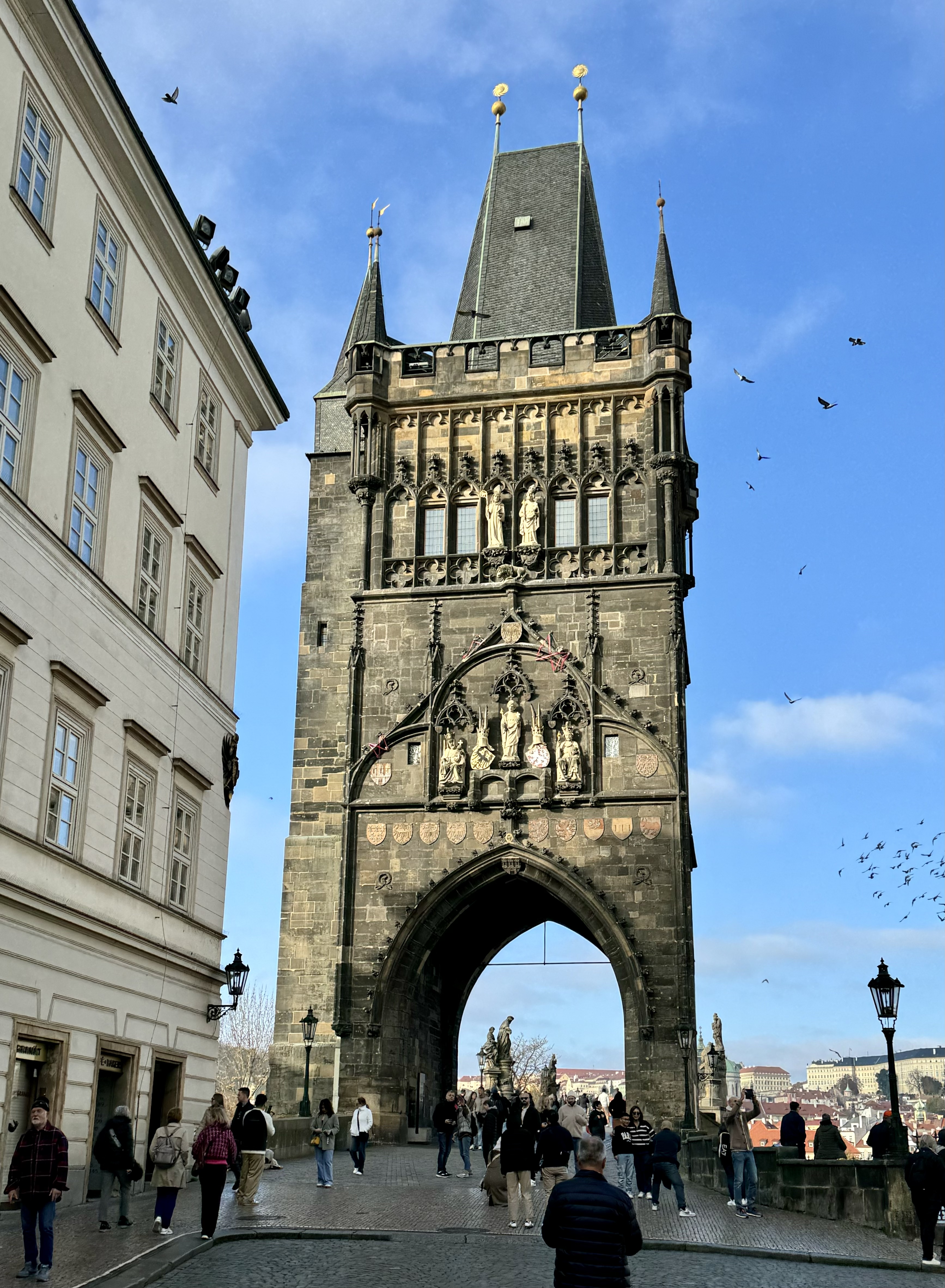
For seventeen years, he worked on twenty massive paintings portraying scenes from Slavic history. In 1928, after finishing the monumental series, Mucha gave The Slav Epic to the city of Prague on the condition that the city build a special pavilion for it.
“Let it announce to foreign friends—and even to enemies—who we were, who we are, and what we hope for,” he said.
Almost a hundred years later, appropriate space in Prague to exhibit Mucha’s gift has yet to be designated. Instead, the series languishes in the small town of Moravský Krumlov.
One of the largest collections of Mucha’s works belongs to professional tennis player and fellow Czech, Ivan Lendl.

Art therapy
Bauhaus was a German art movement that greatly influenced modern graphic design and architecture. Staff at the Bauhaus school in Weimar included prominent artists such as Paul Klee and Wassily Kandinsky. One of the school’s instructors was Friedl Dicker-Brandeis.
In 1942 Dicker-Brandeis and her husband were relegated to the concentration camp of Terezín in Nazi-occupied Czechia. While there, she organized secret art classes for the six hundred children in the camp, using smuggled supplies.
She encouraged the children to illustrate their memories, dreams, and experiences in the camp. She insisted they sign their work.
In September 1944, Dicker-Brandeis was transported to the Auschwitz death camp. Before she left, she entrusted others at Terezín with two suitcases containing forty-five hundred children’s drawings. Soon after, she and most of the children were murdered.
After the war, the young victims’ artwork was given to the Jewish Museum in Prague. Some of the collection is on display at the Pinkas Synagogue, as a memorial to their lives. After World War II, the names of over seventy-seven thousand Czech Holocaust victims were inscribed on the synagogue walls.

Pinkas Synagogue
Over the centuries, the Jewish community in Prague flourished or floundered depending upon the whims of the empires in power. By the 1100s, the community was confined to a ghetto between the Old Town and the Vltava River. By the 1700s, more Jewish people lived in Prague than anywhere else in the world.
The population was over ninety thousand at the beginning of World War II. During the Holocaust, however, most of the Prague Jews were transferred to death camps. At least two thirds of them were murdered. Today, the Jewish community in Prague numbers less than two thousand.
Not much is left of the Jewish Quarter except for the old cemetery and six synagogues.
In addition to the Pinkas, I visited the Maisel Synagogue and the Old New Synagogue. Kippahs are distributed at the entrances, as head coverings are required. The Old New Synagogue, built in 1270, is Europe’s oldest active synagogue.
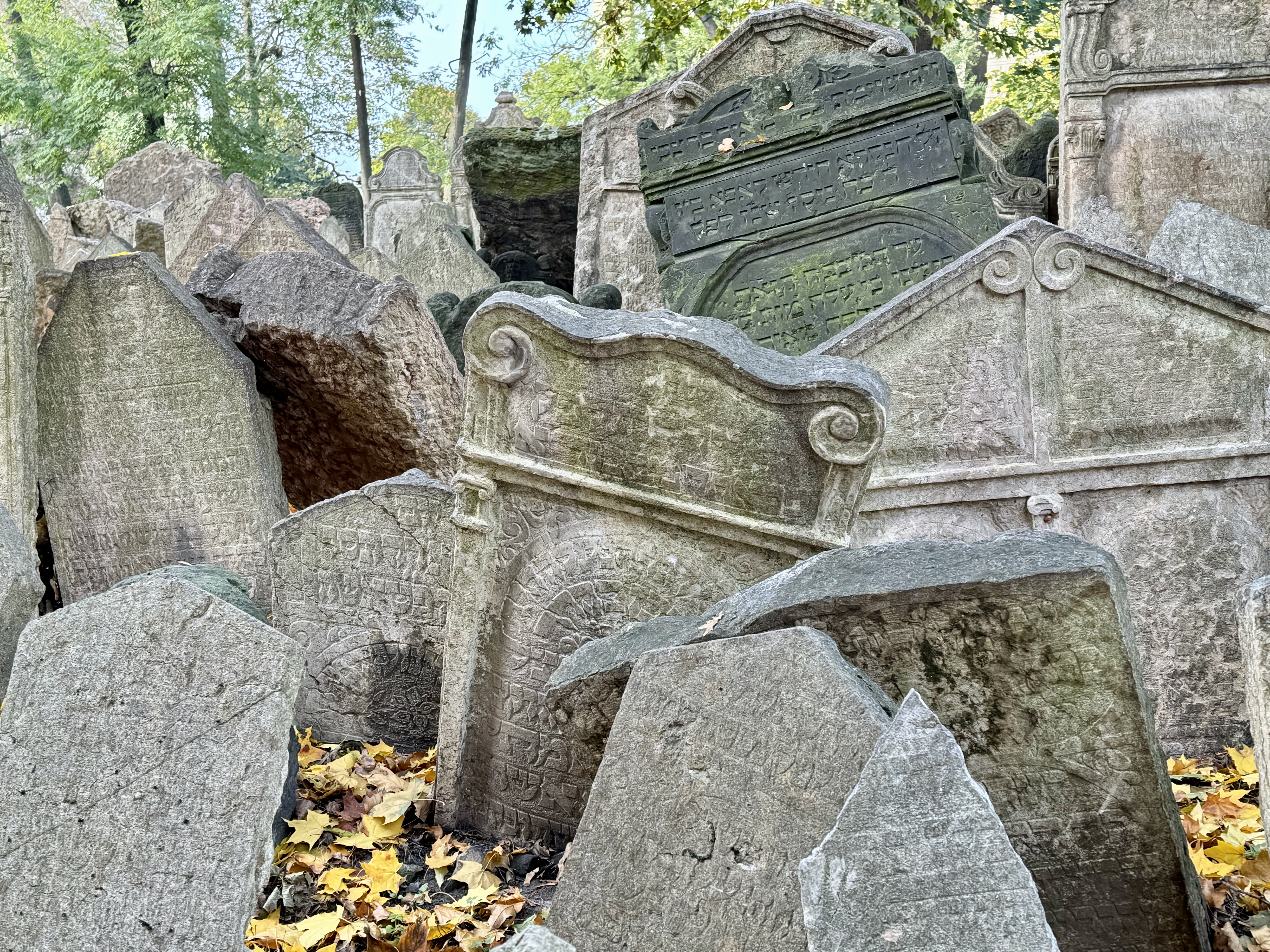
Around two hundred thousand deceased were buried in the Old Jewish Cemetery between the 1400s and the 1700s.
Due to the scarcity of space within the quarter, bodies were buried on top of each other. In some places, the graves are layered ten deep.
As a result, the surface of the cemetery is several feet higher than the surrounding streets. The old tombstones are densely arranged and bristle haphazardly from the uneven ground.

Heart attack
As chief of the SS, the Nazi’s agency of security and intelligence, Reinhard Heydrich was Hitler’s third in command.
He was one of the architects of the Holocaust and directed the forces that murdered more than two million people. Hitler called him “the man with the iron heart.” He was stationed in Prague. In 1942, a Czech and a Slovak teamed up to end his reign of terror.
Jozef Gabčík and Jan Kubiš were both staff sergeants in the Czechoslovak army. When Nazi Germany occupied their country, they fled, along with the Czech Exile Army, to Great Britain. There, they received special-operations training, which prepared them to return to Czechoslovakia and serve in the resistance.

In December 1941 they parachuted back into their homeland. The Czech underground hid them and helped them prepare for their operation. Their mission was to assassinate Heydrich.
Every day Heydrich was driven from his home to his office in Prague Castle. One morning in May 1942, Gabčík and Kubiš were waiting for him along his route. As Heydrich’s Mercedes convertible slowed to negotiate a sharp turn, Gabčík stepped in front of the car with his submachine gun. When he attempted to shoot, however, the gun jammed.
Heydrich ordered his driver to stop, then stood up and fired his handgun. Meanwhile, Kubiš threw a grenade under the vehicle. Shrapnel from the explosion wounded Heydrich. Nevertheless, he and the driver pursued the assailants on foot.
The driver’s gun also jammed, which allowed Kubiš to escape. Gabčík and Heydrich exchanged fire, before Heydrich collapsed from his wounds. Gabčík also escaped, along with the team’s lookout.

They made their way to a hideout in the crypt of the Cathedral Church of Saints Cyril and Methodius.
Eight days later, Heydrich died in the hospital from complications caused by his shrapnel injuries.
The commandos hid in the crypt for three weeks. Four more British-trained Czechs who had supported the operation joined them in hiding.
After killing and torturing hundreds of Czech citizens, the Nazi SS and Gestapo learned the location of the refuge and stormed the church. In a six-hour battle, the seven resistance members held off hundreds of Nazi troops.
In the end, fourteen Germans were killed and twenty-one wounded. Two of the Czechs were killed. The rest committed suicide rather than be captured.

Heydrich’s assassination by the Czech underground caused the Allies to immediately revoke the Munich Agreement. Following the defeat of Germany, the annexed borderlands were returned to Czechoslovakia.
The story of the assassination was portrayed in the 2016 film Anthropoid, starring Cillian Murphy (of Peaky Blinders and Oppenheimer fame). The film was shot entirely in Prague.
In Prague, I visited the cathedral, the site of the paratroopers’ last stand. It is still pockmarked by bullets. In its crypt is the National Memorial to the Heroes of the Heydrich Terror, a mini-museum telling the story of the operation and the final battle. The crypt is cold and bare, as it would have been in 1942. Busts of the seven Czech soldiers stand on pedestals adorned with candles and flowers.

Out the window
I hopped onto Tram #23 from near the National Gallery and rode it across the river and uphill to Prague Castle. Construction of the castle began in the late 800s. Inside its enclosed cathedral, named for Saint Vitus, is the tomb of Saint Wenceslas and a stained-glass window designed by Mucha.
In ancient Greece, when a majority of citizens determined an individual was a threat to society, say, a politician with tyrannical tendencies, they could vote to have him or her ostracized. The banished person had ten days to leave the city. After ten years, he was allowed to return.
Ostracism was decided by the popular vote of the people, not by the government.
Medieval Prague had a more brutal solution—defenestration, a fancy word for the throwing of someone out of a window.
The term was coined in Prague following a couple of such tossing incidents. In 1419, the mayor, a judge, and thirteen members of the town council were ejected through a window in the town hall by a mob demanding the release of political prisoners. All died from the fall.
In 1618, a confrontation between Catholics and Protestants in the Royal Palace led to the defenestration of two Catholic governors and their secretary. I stood in the room where the chucking occurred, looked out the window, and tried to imagine how all three men survived the seventy-foot fall.
Catholics said they had been protected by angels. Protestants claimed their falls had been softened by a dung heap below the windows. The incident helped start Europe’s Thirty Years’ War.

Kafkaesque
Author Franz Kafka was born near Old Town Square in 1883. His birthplace is gone, but a plaque and a small plaza mark its former location. Kafka spent most of his life in Prague, working for insurance companies and writing in his spare time. He died at forty.
His best known novels are The Trial, The Metamorphosis, and The Castle. Most of his work was published after his death.
The characters in his stories feel anxious, alienated, or tortured, as they grapple with surreal circumstances. The term Kafkaesque is used to describe absurdly complicated bureaucratic situations.
As a chair at Charles University, Albert Einstein lived for sixteen months in Prague, beginning in 1911. He occasionally spent his free time with Kafka. Sometimes Einstein would play the violin and Kafka will read excerpts from his work.
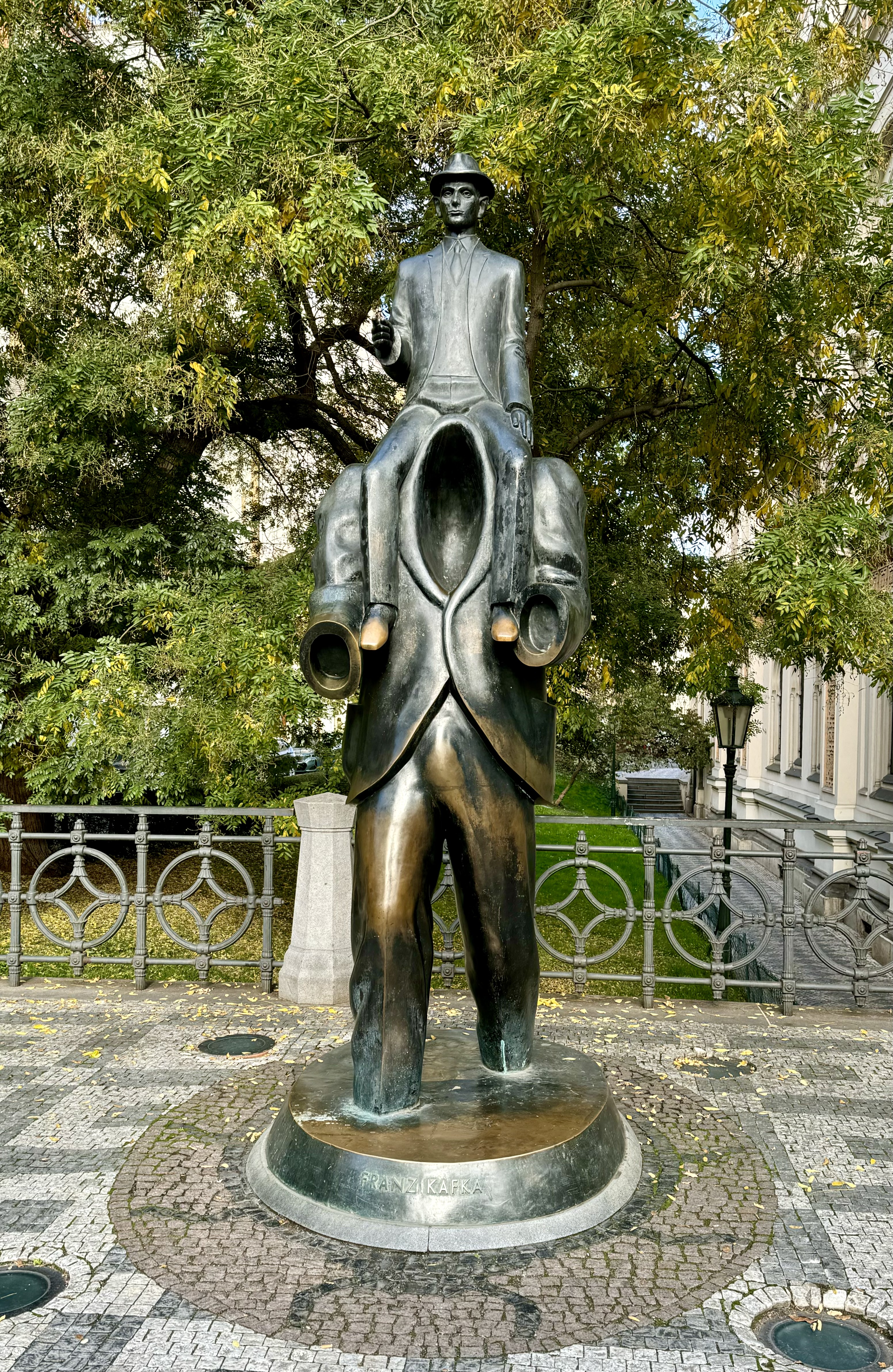
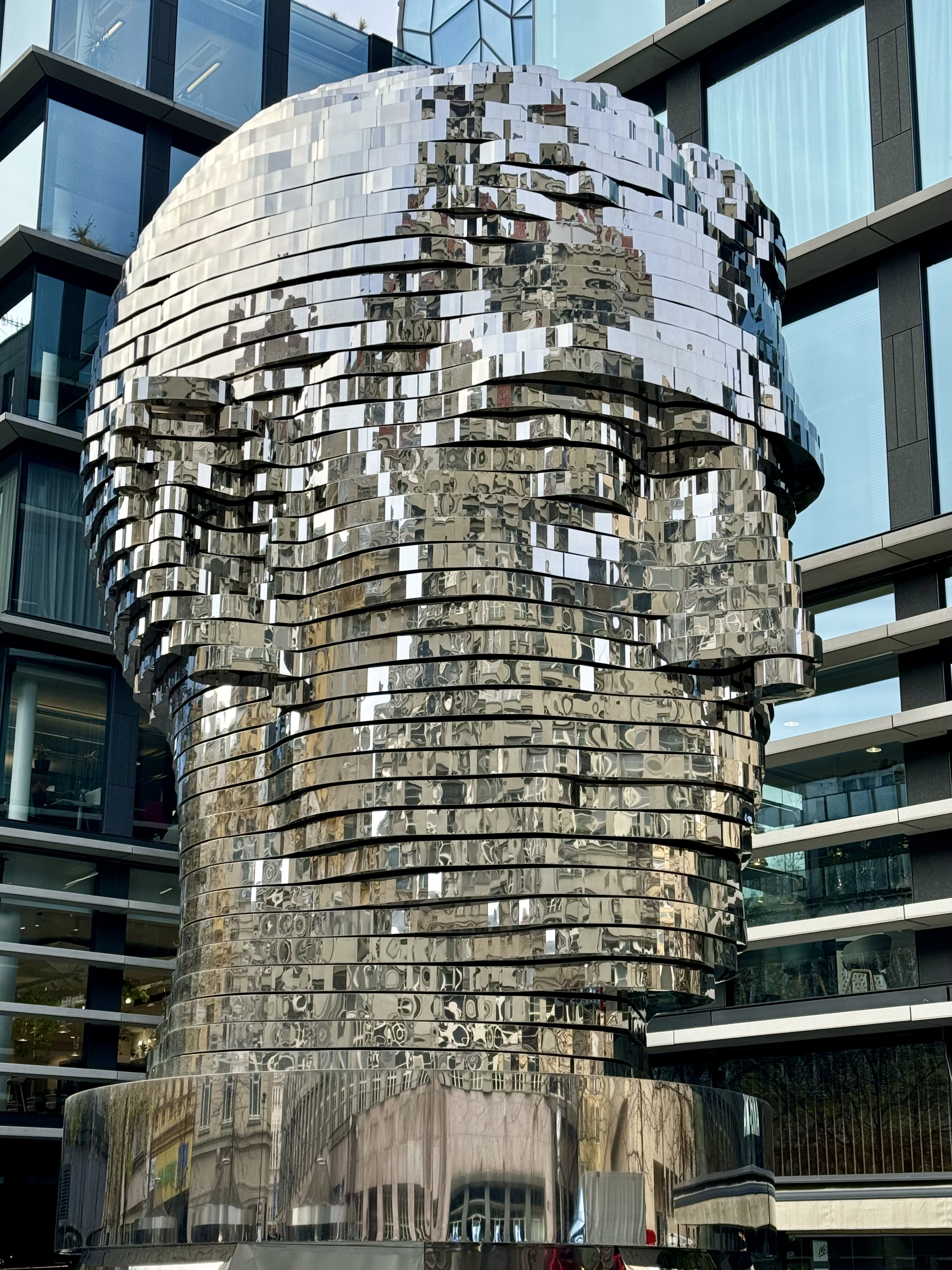
I visited a couple of Prague’s monuments to Kafka, both of them art installations.
Near the Spanish Synagogue is a sculpture depicting Kafka riding on the shoulders of a business-suited figure with no head or hands, a reference to one of the author’s short stories.
In Prague’s New Town is a thirty-five-foot-tall sculpture created by David Černý. The work is an assembly of forty-two shimmering layers that rotate continuously. Every once in a while, they lock into place and form a likeness of the head of Kafka.
Pissing match
In 1945 the Soviets erected a monument to themselves—a tank representing their “liberation” of Prague from the Nazis. In 1991, as a protest against the Soviet occupation, art student Černý painted the tank pink.
He was arrested and the tank repainted green. In protest of the arrest, members of Czechia’s parliament painted it pink a second time. The color swapping went back and forth before the tank was permanently removed.
As I headed downhill toward the Charles Bridge, I was startled to see a man dangling calmly by one hand from a rod several stories above the street. He turned out to be Sigmund Freud, or rather a likeness of him.
The sculpture known as Man Hanging Out is another work by Černý, whose provocative work can be found all around Prague.
In the district of Prague called Lesser Town I found another sculpture by Černý, this one of two men facing each other and urinating.

The bronze sculpture, called Piss, is installed outside the Franz Kafka Museum. The statues of the two men are standing in a water-filled basin, shaped like the country of Czechoslovakia. Visitors can command the men to pee messages into the water via text messaging.
The day I was there one of the fountain’s two streams was not functioning. Bladder infection?
The sculpture is perhaps a comment on the dissolution of Czechoslovakia. The borders of the country were reestablished after World War II. Then, in 1993, the two regions that made up the country split peacefully, becoming Czechia and Slovakia. The breakup has been called the Velvet Divorce.

Imagine
John Lennon was murdered in 1980, nine years before the Velvet Revolution. Soon after, on a secluded wall in Lesser Town, some unknown artist painted an image of Lennon and some lyrics as a memorial. More images and poetry began appearing, along with candles and flowers.
At the time, Prague was controlled by the Soviet regime who viewed the graffiti on the wall as Western-influenced political resistance. The Czechoslovak secret police painted over the memorial.
The next day the wall was covered with political messages.

For years this cat-and-mouse game continued. Daily, the police painted over the graffiti. Daily, it reappeared. The wall became a canvas for messages of hope and a meeting place for those seeking freedom.
After the Velvet Revolution, the Lennon Wall was no longer a point of contention. It became an authorized memorial site. Now, professional artists regularly paint it with new designs, some relating to international causes such as global warming.
As a Father’s Day gift one year, my kids gave me a framed photo of an image from the Lennon Wall. I finally got to visit the site in person. For a city that has suffered thorough religious wars, pogroms, world wars, the Holocaust, and Soviet occupation, Lennon’s lyrics always resonate.
Imagine there's no countries.
It isn't hard to do.
Nothin' to kill or die for
And no religion, too.
Imagine all the people living' life in peace.
 YearTripper
Kirk, Prague is an all time favorite of mine. Thank you for letting all of us travel with you.
Godspeed!
Hugs!