What would you do if your home were invaded? Five options come to mind.
- Act as though nothing unusual was happening and hope for the best.
- Conceal yourself and hope not to be discovered.
- Jump out of a window and run to a neighbor’s home for safety.
- Grab a baseball bat and confront the intruders.
- Share a meal with your uninvited guests and reveal where your neighbors hide their valuables.
Adapt, hide, escape, resist, or collaborate.
None of us knows which strategy we would adopt in a risky confrontation. The choice would be even more complicated if the lives of family and friends were at risk.
In the Baltic countries, millions of residents were faced with this stressful dilemma—every day for fifty-one consecutive years.

Backs to the sea
In the north, the Atlantic Ocean thrusts a long arm of water into the continent of Europe.
The arm stretches past Denmark, Germany, and Sweden, gives an elbow to Poland, and then reaches north to Finland.
The arm is the Baltic Sea, one-and-a-half times larger in area than all five of America’s Great Lakes. Three small countries are squeezed between its eastern shore and Russia.
They are the Baltics—Lithuania, Latvia, and Estonia.
Lithuania and Latvia are each the size of West Virginia. Estonia is smaller. Lithuania has a population of nearly three million; Latvia, two million; and Estonia, one-and-a-half million.

Lithuania has historical ties to Poland. Both Latvia and Estonia exhibit Scandinavian and German influences.
Despite their differences, the three countries experienced common hardships. Like orphans in an abusive foster home, they looked to each other for support. Today, they cooperate on national defense. All three are members of NATO and the European Union.
While visiting the Baltics, I found it easy to forget that the citizens achieved their independence only thirty-four years ago. To them, freedom is a new experience.
To more easily navigate the Baltic countries, Leslie and I joined a tour group of twelve, composed of Australians, English, Canadians, and one other American.
Iron wolf
For centuries, pagan tribes inhabited the Baltic coast. They were occasionally overrun by their more belligerent neighbors—the Vikings, Danes, Slavs, and Germans.
The tribes in the southern Baltic region managed to consolidate and form their own kingdom. Through mergers and acquisitions (that is, invasions), the realm of Lithuania grew exponentially.
According to legend, Grand Duke Gediminas, an early Lithuanian king, was hunting in the hills near the confluence of the Vilnia and Neris rivers. At the end of the day, he was too tired to return home and instead camped in the valley. While sleeping, he dreamt that a great wolf made of iron was howling loudly from the top of a hill.
Gediminas asked his priest to interpret the dream. The priest told him the iron wolf represented a city that the duke would build on the hill. The wolf’s howling signified that the city’s fame would spread throughout the world.

Gediminas founded the capital city of Lithuania in 1323 and named it Vilnius after one of the rivers. On the hill he built a defensive complex anchored by three castles.
The Teutonic Knights, an order of German warrior-monks, attacked the fortifications repeatedly, but never succeeded in taking the upper castle.
In the late 1300s, Lithuania formed a union with Poland, together ruling Hungary, Croatia, and what is now Czechia and Romania. The alliance was at one time the largest country in Europe.
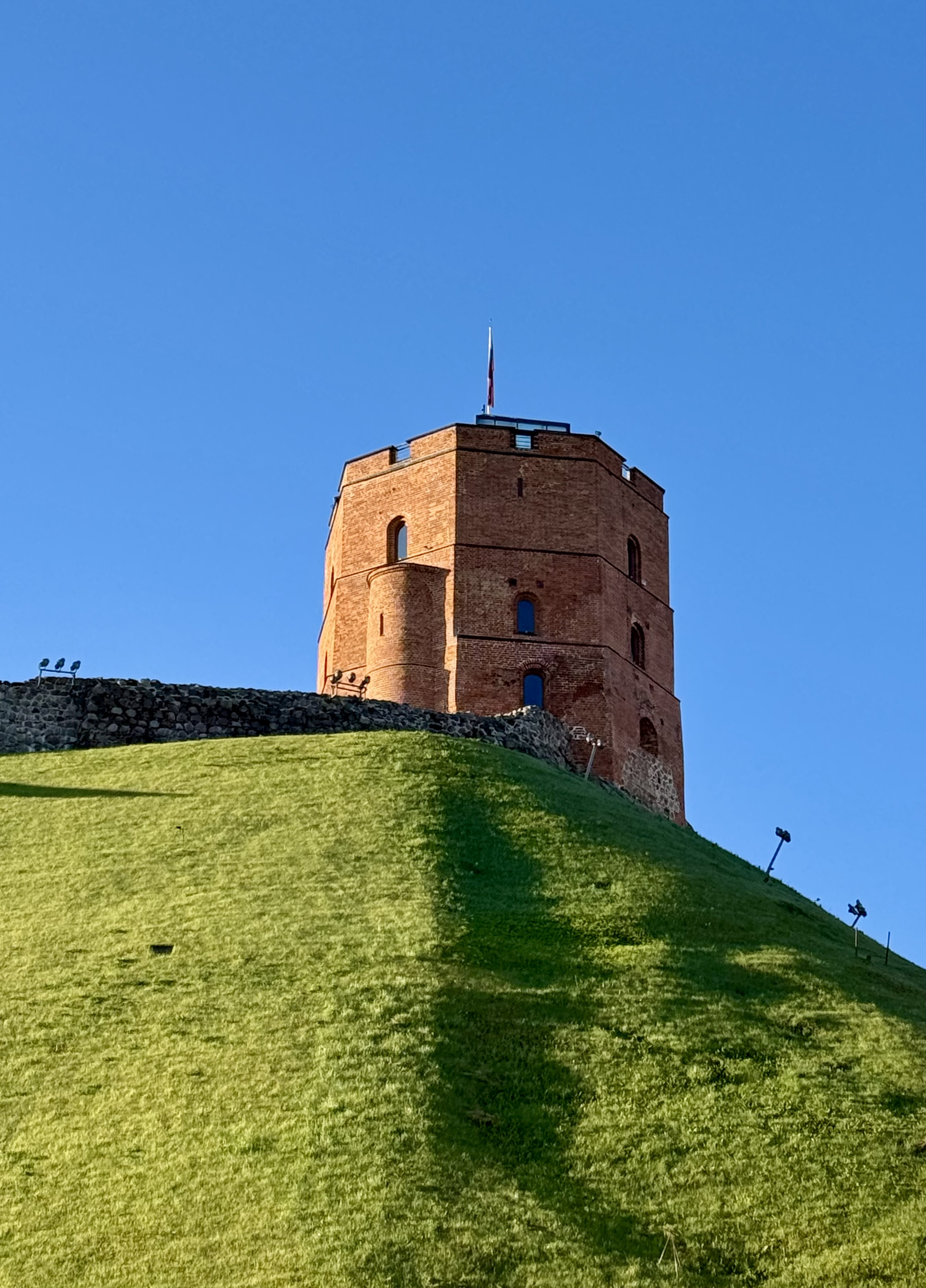
Leslie and I climbed the cobblestone path to Gediminas Tower, the only remaining feature of the upper castle. Inside, a spiral stone stairwell leads to the roof and a spectacular three-hundred-and-sixty-degree view over Vilnius and the river. Both Gediminas Tower and the iron wolf are proud symbols of Lithuania.
Immeasurable loss
Through the Middle Ages, the Lithuanians built their empire. Meanwhile, the Estonian and Latvian tribes remained isolated and independent, and thus could not deter invasions from Sweden, Denmark, and Germany.
In the 1700s, the entire territory fell to Russia, where it remained until Germany invaded at the beginning of World War I. After Germany lost the war, the borders of Europe were redrawn. The three Baltic countries took advantage of the moment to unfetter themselves from Russia. They achieved independence in 1920.
Their sovereignty lasted only nineteen years. In 1939 Hitler and Stalin made a secret pact, divvying the countries they each planned to invade.
When Paris fell to the Nazis, the Soviets moved on the Baltics, set up puppet governments through rigged elections, and established military control.
Against their will, the three countries found themselves constituents of the U.S.S.R.
Thus began a string of occupations, first by the Soviets from 1940 to 1941, then by the Nazis until 1944, and then again by the Soviets until 1991. Fifty-one straight years of repression.
The true number of Baltic residents who died as a result of the three occupations will never be known, as research methods vary and statistics are disputed. The best guesses, however, are staggering.
In total, 614,000 Baltic civilians are estimated to have died due to Soviet and Nazi war crimes, the Holocaust, bombing, and war-related famine and disease.

Another 89,000 died while forced to fight on behalf of Germany or Russia. The Baltics suffered the highest percentage of deaths from 1939 through 1944, military and civilian, of any country in the world, except Poland.
Nearly ninety percent of the Jewish population of the Baltics, around 216,000 people, were murdered.
Another 505,000 Baltic civilians were deported by the Soviets and the Nazis. Over 20,000 partisan fighters were killed. Another 18,000 were deported or executed.
In total, twenty-one percent of the population of the Baltic countries were either displaced or killed.
These are rough estimates. I share them to remind myself of the awful magnitude of the crimes. Elie Wiesel, Holocaust survivor and writer said, “To forget the dead would be akin to killing them a second time.”

Lady of the gate
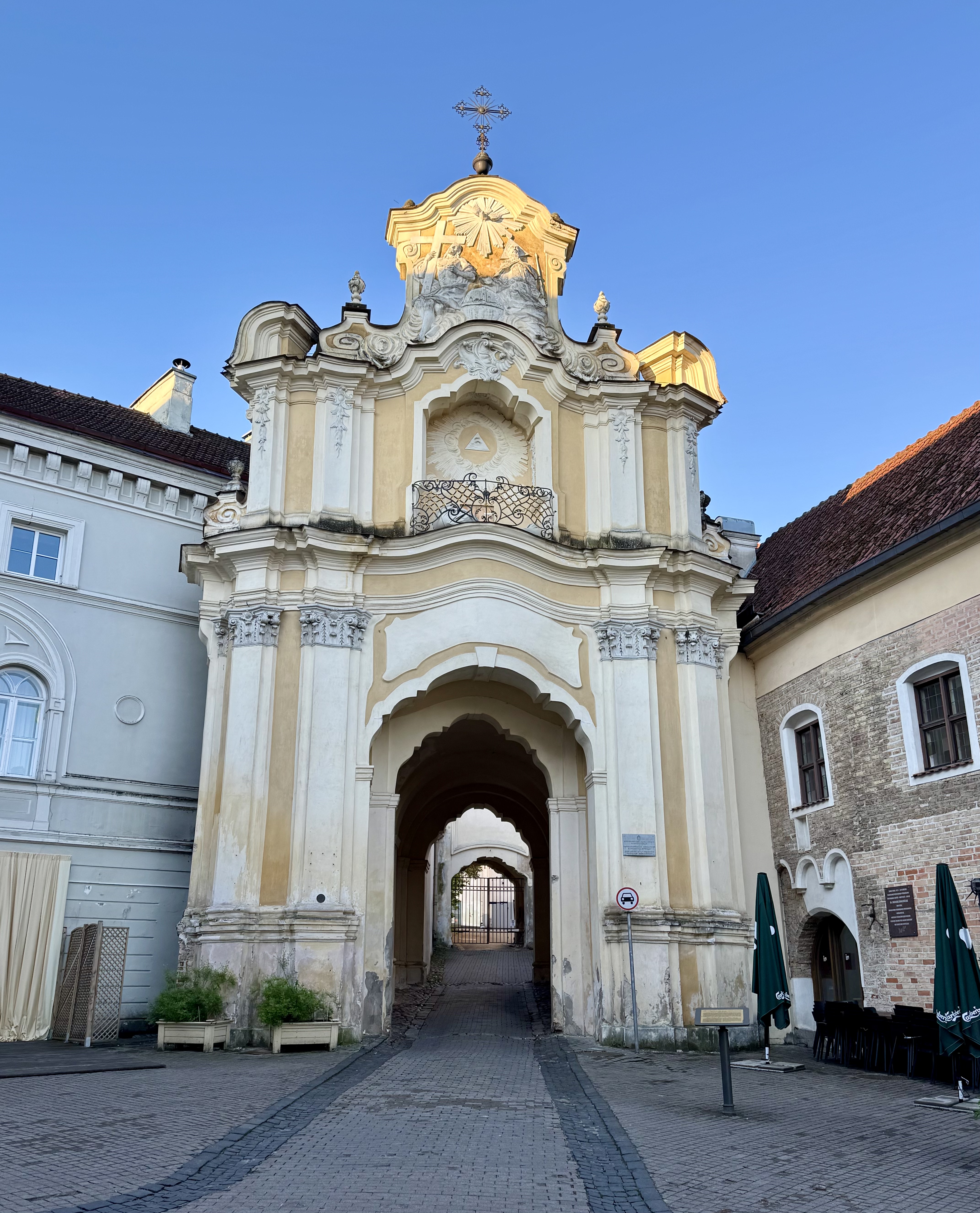
We met our Lithuanian guide Rūta near the Gate of Dawn, one of the nine gates of the Vilnius city wall and the last one standing.
Rūta and our Latvian guide Jelizaveta are friendly rivals, each playfully touting the advantages of their home countries.
Jelizaveta said the Lithuanians are considered the Italians of the Baltics. Rūta referred to Latvia as Flatvia, due to its level elevation.
Housed within a chapel above the Gate of Dawn is a painting of Mary, an icon venerated by pilgrims. The image was likely painted in the mid-1600s.
The painting is credited with several miracles, including the saving of the city.

In 1702, Vilnius was captured by the Swedes. The Protestant Swedish soldiers mocked the painting and partied in the chapel through the night. One soldier left a bullet hole in the painting.
The next morning, the gate fell, crushing and killing four of the soldiers. Inspired by the incident, the Lithuanian army counterattacked and won back the city.
Churches around the world are dedicated to the icon. Many are located in Lithuanian and Polish communities, such as Saint Mary of Ostrabrama in South River, New Jersey.
Extreme makeovers
Tourists visiting the city of Vilnius often pause in front of the elegant Church of Saint Casimir and admire its baroque ornamentation. What the peach-pink facade hides, however, are the scars of the church’s volatile, ragged history.
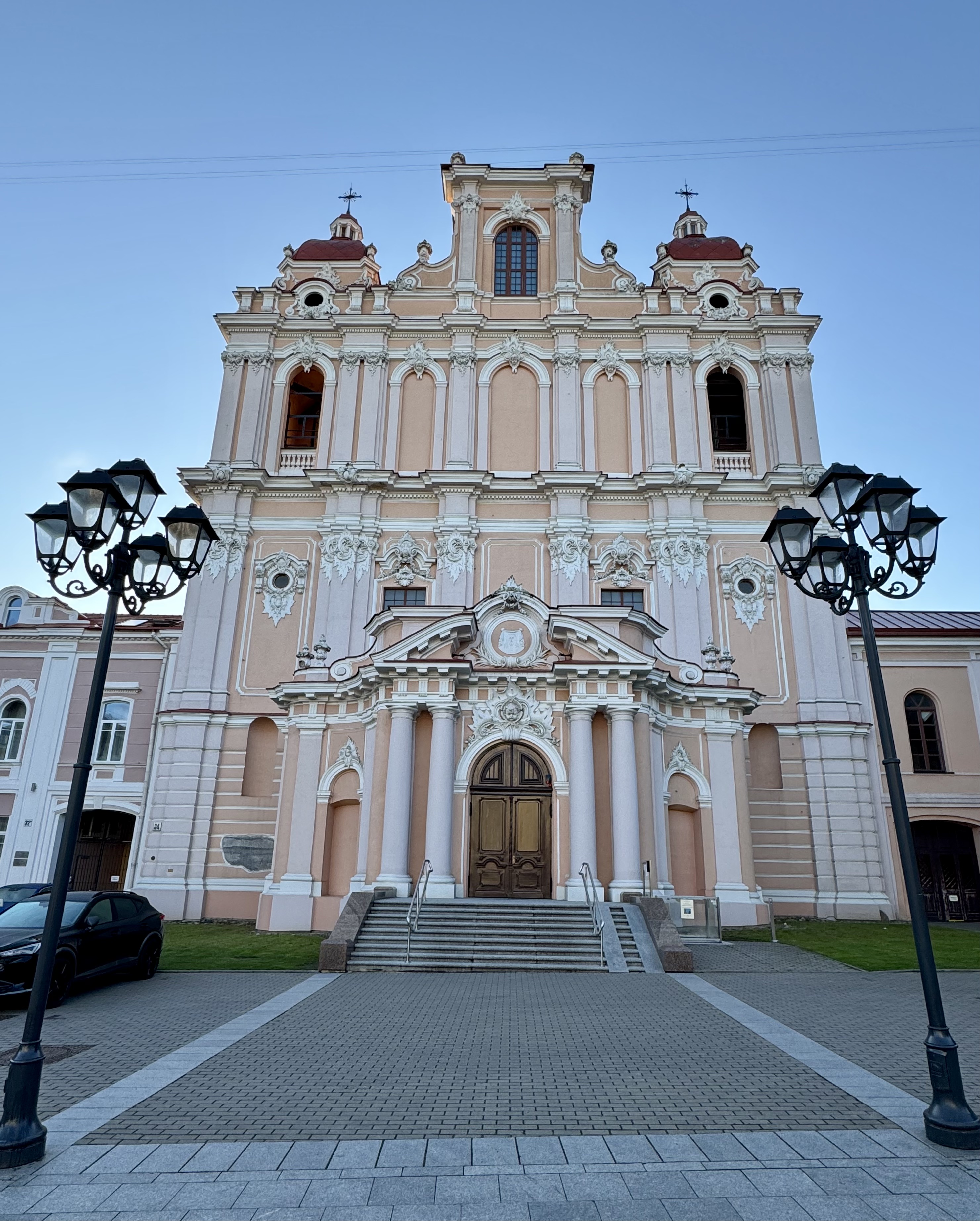
Named for Lithuania’s patron saint, Saint Casimir was built in 1635. Twenty years later, Russians burned it to the ground. The church was rebuilt, destroyed by fire twice more, and rebuilt twice more.
Then, in 1812, Napoleon commandeered the building—for the storage of grain.
Initially Catholic, the church became a revolving door of religious denominations. In 1839, under Russian occupation, the church was converted to Eastern Orthodox. In 1915 the Germans recast it as Lutheran. Following World War I, Saint Casimir returned to the Catholics. In 1949 the building was again used as a granary, this time by the Soviets.
In perhaps its most jarring transformation, Saint Casimir, in 1963, was repurposed by the U.S.S.R. as a museum—the Museum of Atheism.
The strategy behind the improbable makeover was to diminish the influence of the church on the population of Vilnius, and by extension, Lithuania. However, according to a former caretaker, “people . . . were coming to the church, kneeling down, and praying.” In 1988 the church returned to the Catholics.
Today the Church of Saint Casimir is a survivor of the brutal crosscurrents of history. It is the Baltics in microcosm.
Have a heart
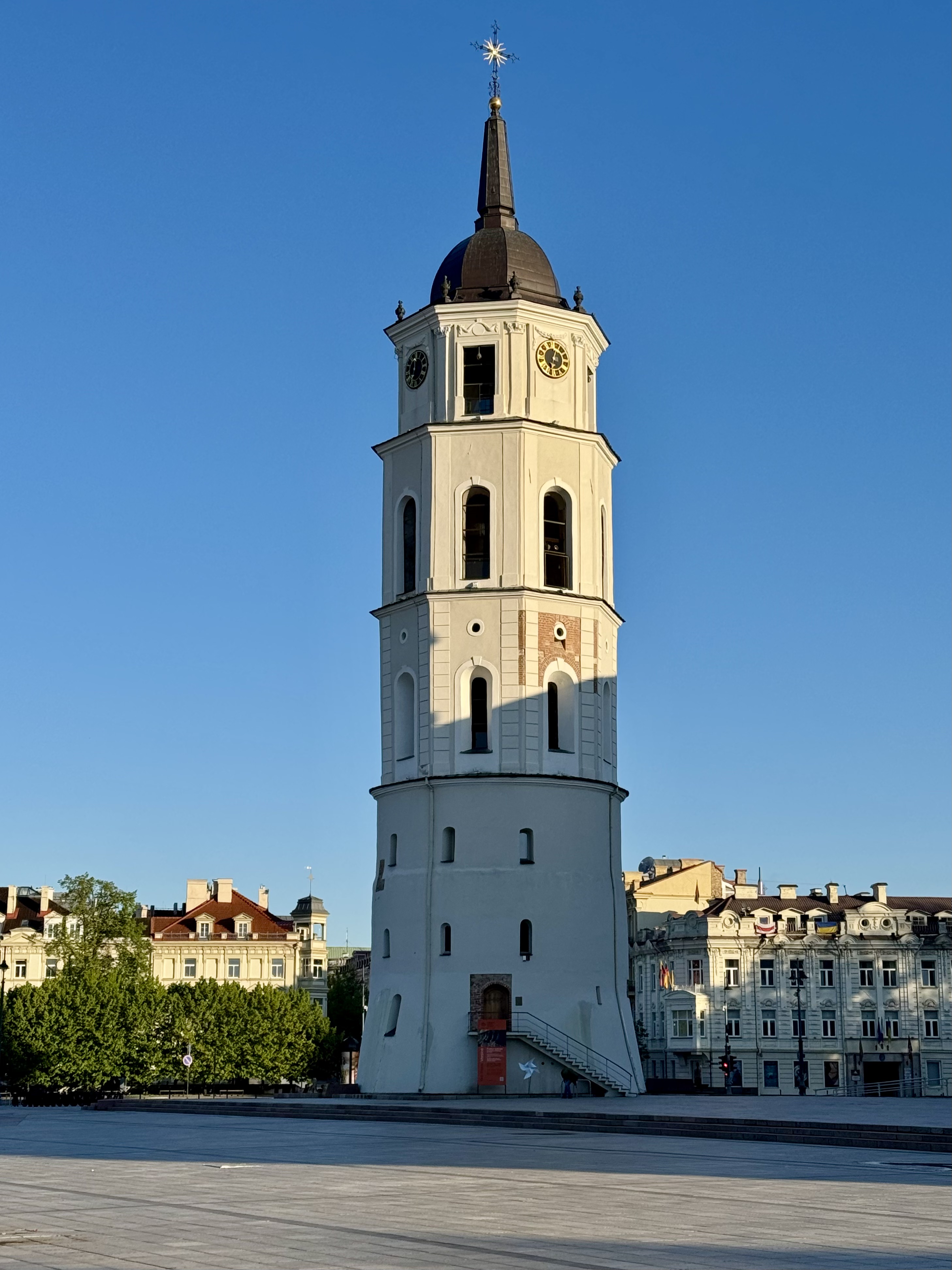
King Mindaugas ordered construction of the Vilnius Cathedral in 1251.
Subsequent rebuilds and renovations have uncovered the original floor. The cathedral has served as the coronation site of several grand dukes of Lithuania. The Soviets, as usual, once used it as a warehouse.

Upon the death in 1648 of Władysław IV Vasa, the grand duke of Lithuania and king of Poland, most of his remains were entombed within a cathedral in Poland.
His heart, however, was removed and interred at Vilnius Cathedral, presumably as a gesture to the alliance.
Constitutional rights
We crossed the Vilnia River to Užupis, a bohemian art colony similar to Freetown Christiana in Copenhagen.

Most of the neighborhood’s Jewish population were removed and murdered during the Holocaust.
In the 1980s, their abandoned homes were occupied by squatters. Užupis now has approximately seven thousand inhabitants.
On April Fools’ Day, 1997, a group of artists declared the district’s independence. The Republic of Užupis has its own president, currency, flag, anthem, even an army—of eleven. Užupis has a constitution.
Here is a sampling of its forty-two guaranteed rights:
- Everyone has the right to live by the River Vilnia, and the River Vilnia has the right to flow by everyone.
- Everyone has the right not to be loved, but not necessarily.
- Everyone has the right to be undistinguished and unknown.
- Sometimes everyone has the right to be unaware of their duties.
- A dog has the right to be a dog.
- A cat is not obliged to love its owner, but must help in time of need.

Horror in the basement
The stories of real people under decades of occupation are told in museums in each of the Baltic capitals. The missions of the museums are similar: to remind the world of the crimes committed and to remember the victims, including those who fled, those who died fighting, and those who were imprisoned, deported, or murdered.
In Rīga, the Museum of the Occupation of Latvia has recorded more than twenty-five hundred video testimonies. Latvians, Lithuanians, Estonians, Jews, Russians, Germans, and others who experienced the occupations have shared personal stories about deportations, the Holocaust, combat, the resistance, and labor camps.
In Tallinn, the museum was originally called the Museum of Occupations and focused primarily on the difficulties endured by Estonians during three successive regimes. The exhibits were curated by local survivors.
In 2018 a revamped museum opened with a new name, Museum of Freedom, and more emphasis on Estonia’s move to independence. However, victims of the occupations saw the renaming as a denial of their nightmare experiences. They charged that removing occupation from the name rewrites history in favor of Russia, the invader.
Tellingly, a quarter of Estonia’s population are Russian or descendants of Russification efforts. Russia still insists the Baltic countries willingly joined the U.S.S.R. (albeit through rigged elections, as in Ukraine).
A compromise was reached with the survivors. The name is now the Museum of Occupations and Freedom.
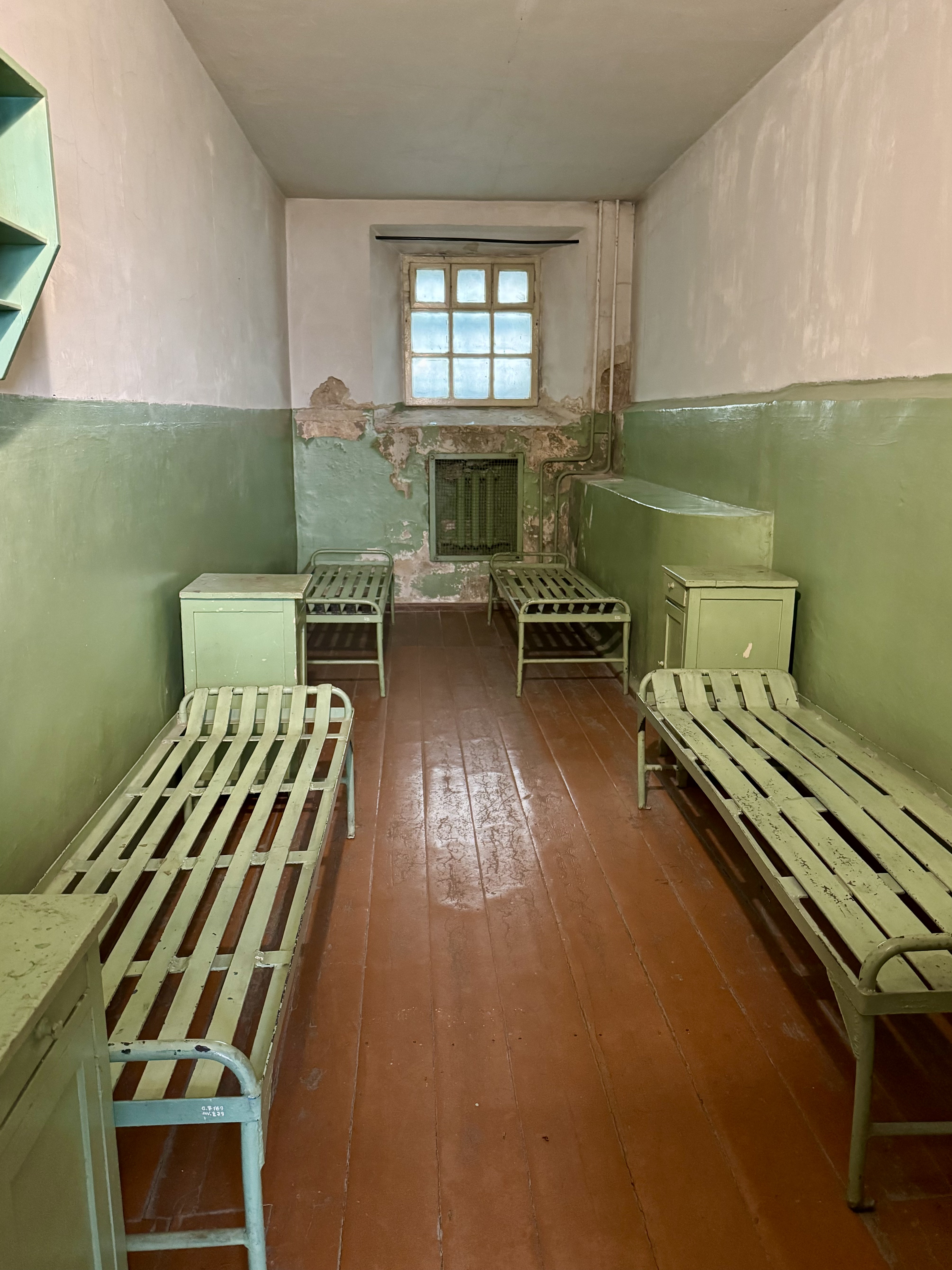
In Vilnius, Leslie and I visited the Museum of Occupations and Freedom Fights. Exhibits share the experiences of Lithuanians who were imprisoned, deported, or sentenced to forced-labor camps in Siberia. A summary of “losses” attributes the murder of 240,000 to the Nazis and 74,000 to the Soviets.
A featured exhibit tells the story of the Forest Brothers, partisan fighters who hid in and operated from Lithuania’s woods.
By 1945, there may have been as many as thirty thousand Brothers in the forests. Through military strikes and propaganda, they worked to disrupt and destabilize occupation forces. The Forest Brothers were supported by American, British, and Swedish intelligence services.
During the Nazi’s reign, the museum building itself served as headquarters for the Gestapo; during the Soviet occupation, the KGB. Those suspected of opposing the authorities were tortured, imprisoned, or killed in the building’s basement.

We steeled ourselves and headed downstairs to the former prison cells, untouched by time, stark and suffocating, with peeling paint and messages scrawled on the walls. One room was padded to muffle the screams.
Over one thousand prisoners were executed by the Soviets in the basement between 1944 and the early 1960s. Some of the remains were buried in a building adjoining the museum. To hide the atrocities, the Soviets poured cement over the floor before vacating in 1991.
Museum controversy
The Lithuanian occupation museum was originally called the Museum of Genocide Victims. The exhibits, however, made barely a mention of the 145,000 Lithuanian Jews who were murdered during the Holocaust.
As Time said, the museum focused “almost entirely on the murder of the Lithuanian non-Jewish population,” even though the country had the highest casualty rate of Jews of any nation in Europe.

An uncomfortable truth is that, as the Nazis ramped up their murder machine, some anti-Semitic Lithuanians facilitated the clearances. The Lithuanian museum was accused of Holocaust denial.
To tamp down controversy, the organization changed its name to the Museum of Occupations and Freedom Fights. Like history books, history museums can be biased.
Pink soup
At a restaurant specializing in traditional Lithuanian food, I tried šaltibarščiai, a version of borscht that is served chilled. The soup is Barbie pink.
The soup stock is a blend of beet juice, kefir (fermented milk), and fresh dill. Other ingredients include beets, cucumbers, radishes, green onions, and slices of hard-boiled eggs. Boiled potatoes are served on the side.
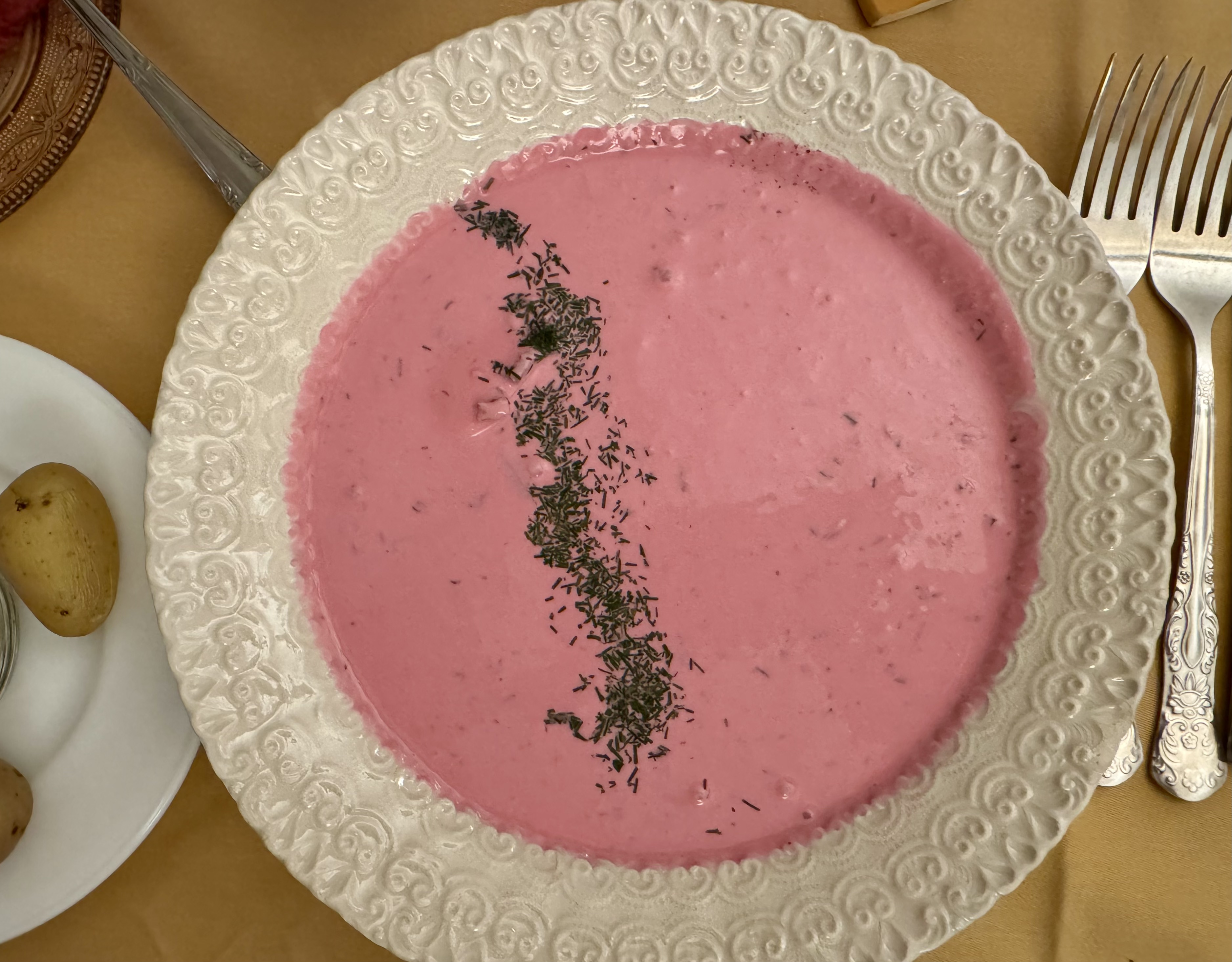
The Latvian version, called aukstā zupa, sometimes involves sausage and vinegar. Rye bread accompanies the soup, instead of potatoes.
The two countries are engaged in friendly competition as to which version of pink soup tastes better. Lithuania, however, has turned up the heat. Its marketing campaign humorously belittles Latvia’s version.
In 2025, ninety-three thousand people attended the country’s Pink Soup Festival, featuring a pink parade and pink-costume contest. Waiters compete in a race through the streets while balancing full bowls. Festival attendees can careen down a 165-foot slide into a giant bowl of soup. (Watch the fun here.)

Non-citizens
Our Latvian guide told us a joke: A visitor arrived at a border crossing into the Baltics. At passport control the guard asked, “Nationality?” The visitor replied “Russian.” The guard asked, “Occupation?” The visitor replied, “No, just visiting this time.”
This joke is probably funnier to the 445,000 first-, second-, and third-generation Russians living in Latvia than it is to ethnic Latvians. Our guide is the daughter of such a Russian “settler.”
During the occupations, the Soviets deported hundreds of thousands of Latvians and replaced them with Russians. The intention was to Russify the country; that is, to weaken its national identity.
Today, ethnic Russians make up a quarter of the population of Latvia and Estonia. (Only five percent of Lithuania’s population is Russian.)

When Latvia reestablished its independence in 1991, the country granted automatic citizenship to ethnic Latvians, but not to ethnic Russians living in the country.
As the U.S.S.R. no longer existed, the Russians became stateless—disconnected from all countries. Nearly half of the Russians in Latvia are considered “non-citizens.”
For them, the path toward citizenship involves learning to speak Latvian and knowing Latvian history, including that the country was occupied by the U.S.S.R.
Many have chosen not to apply. Some fear taking the test. Some find the requirements demeaning. One charged, “The country’s politics are not based on democratic rights. They are based on ethnic rights.”
League of their own
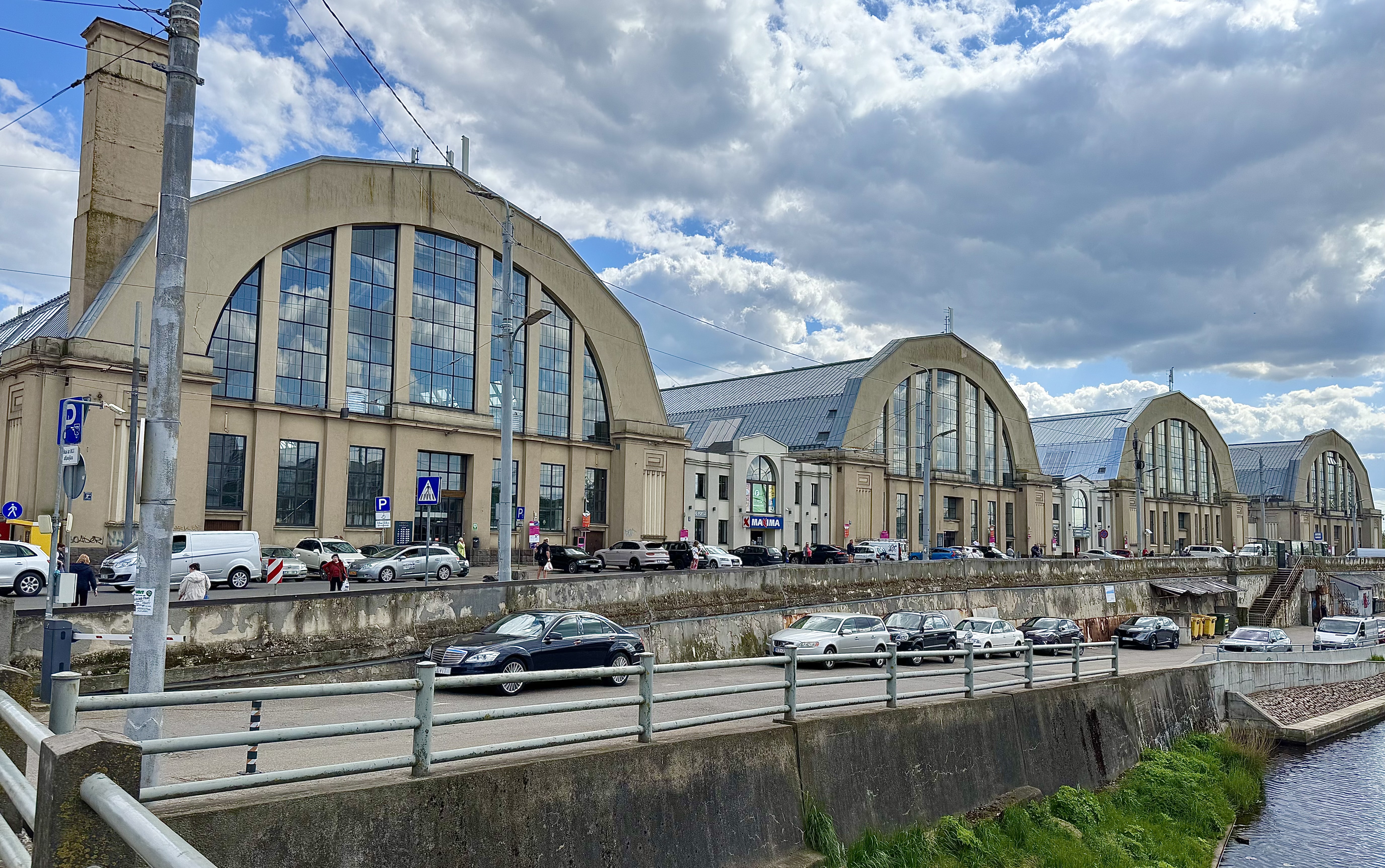
After a four-hour ride on a public bus, we arrived in Rīga, the capital of Latvia. Our first stop was the Central Market, open since 1930. The marketplace was constructed using the metal frames of five German zeppelin hangars leftover from World War I. Housed inside the former airship hangars are hundreds of trade booths.
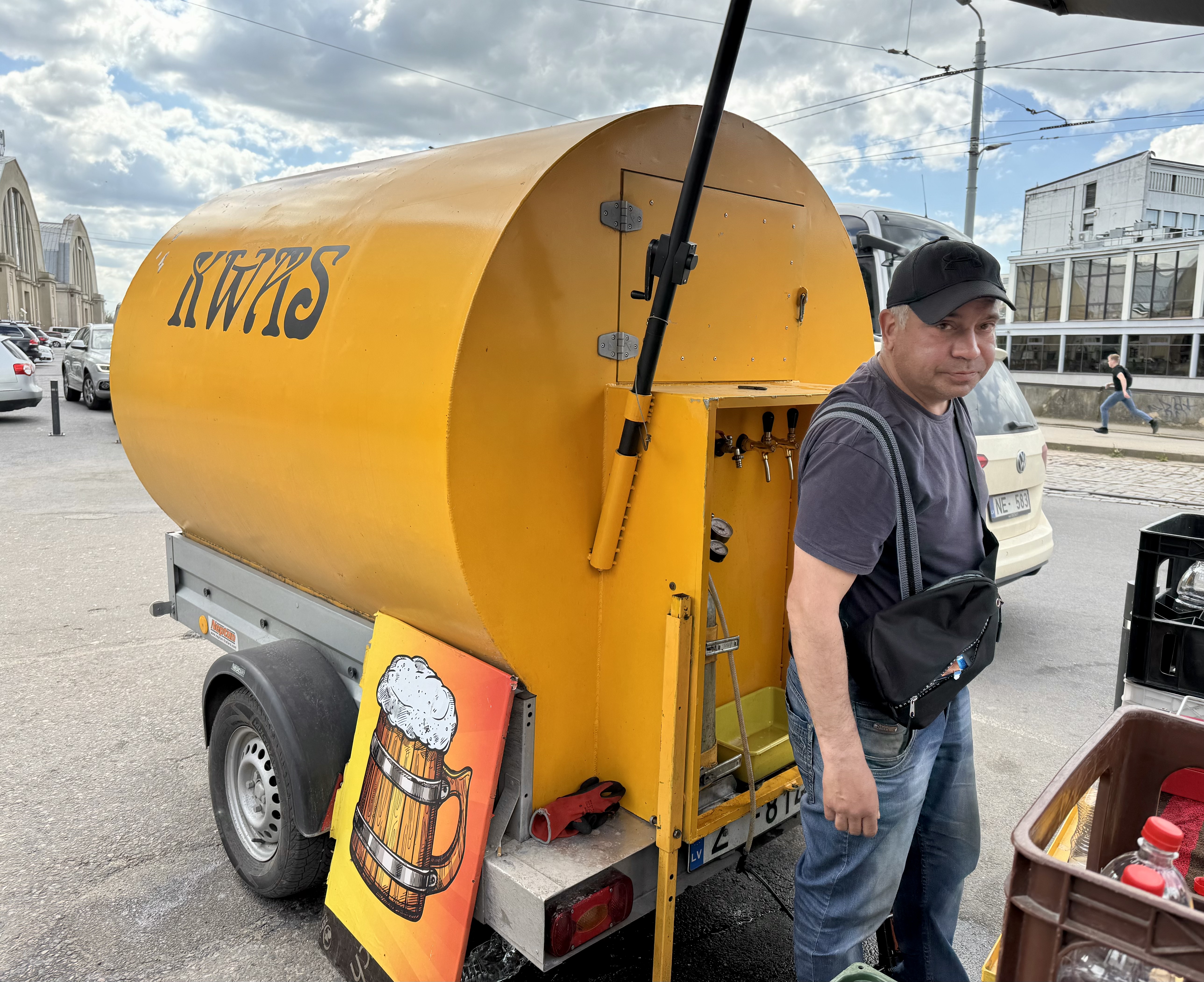
The market is located on the banks of the Daugava River, where produce has been sold since 1571. At one of the stands, we sampled glasses of kvass, a sour beer made from rye.
Rīga was founded in 1201. In 1282, the city joined the Hanseatic League, a network of merchant guilds and ports in northern Europe. The league built ships and docks, protected shipping routes, and organized armies to defend against pirates.
Growing from a few German towns in the late 1100s, the league expanded through the 1400s, eventually connecting almost two hundred towns in eight countries.
Besides Rīga, other league cities included Berlin, Hamburg, Frankfurt, Gdańsk, Kraków, Antwerp, Bruges, and Tallinn in Estonia
The league dominated sea trade in northern Europe for five hundred years. In concept, the association was a forerunner of NATO and the European Union. The capital cities, Rīga and Tallinn, both benefited financially.
Frat parties
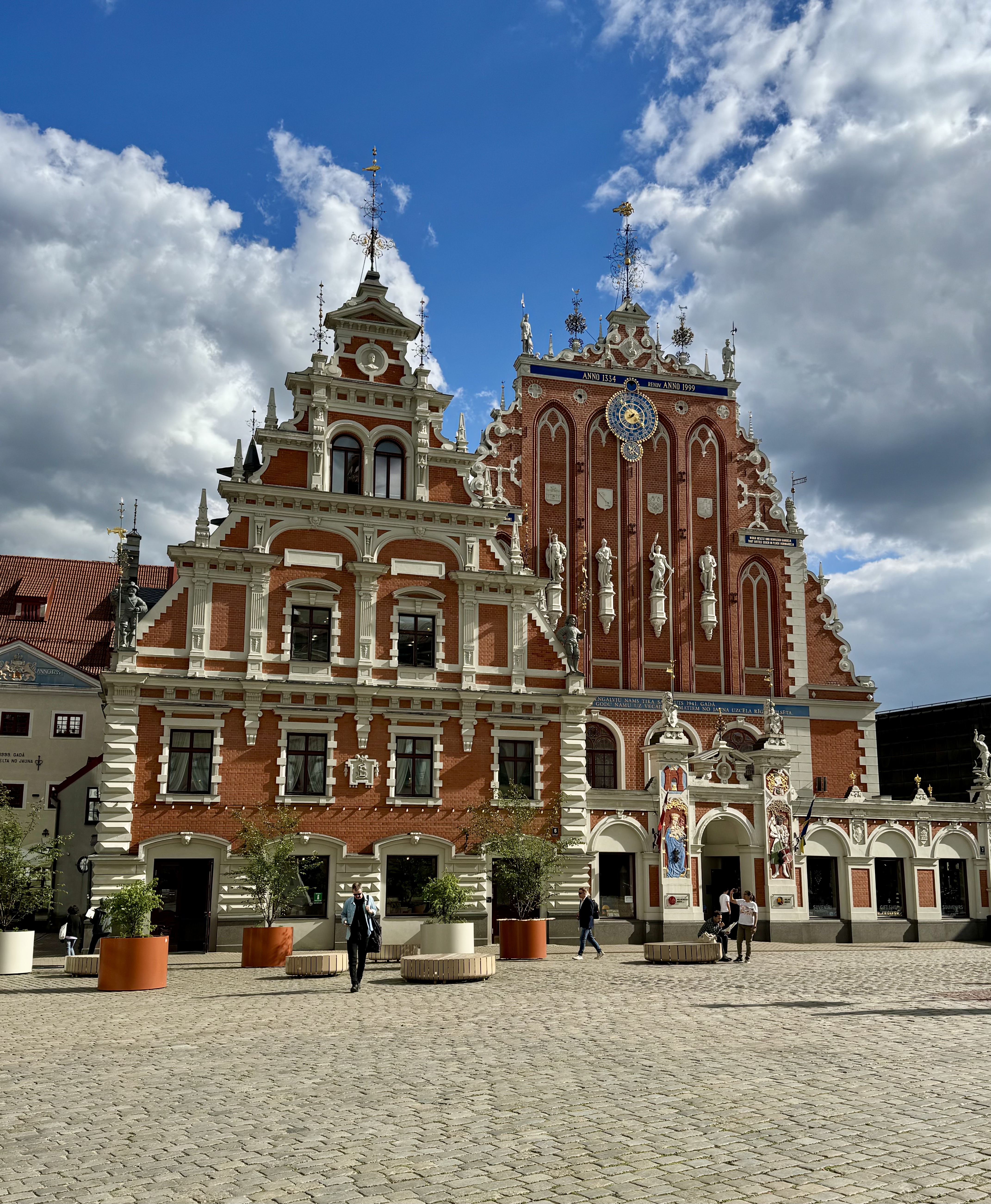
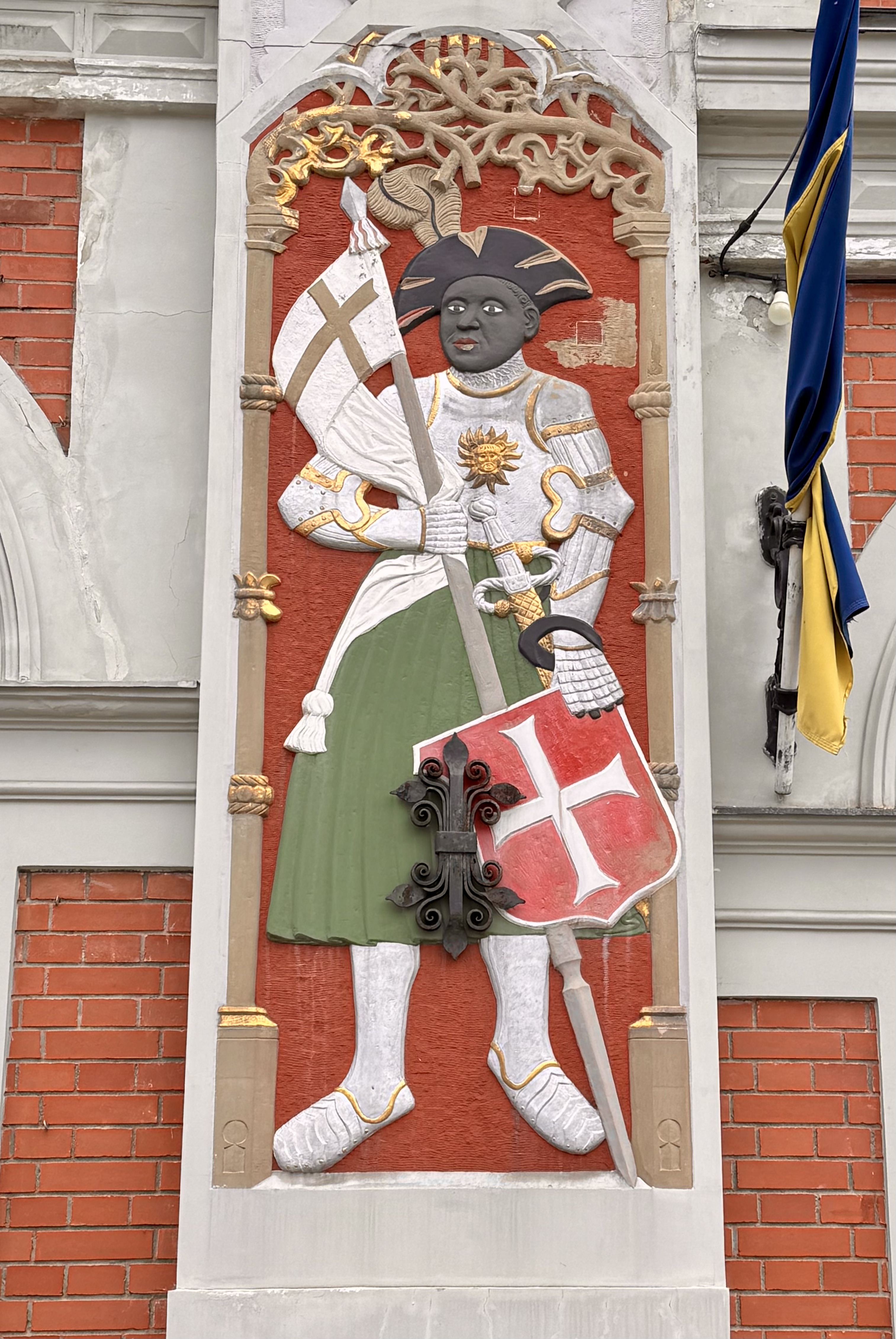
Across from the town hall is the opulent headquarters of the Brotherhood of Black Heads. In the Middle Ages, the Black Heads were a guild of unmarried merchants and ship owners in Rīga. A sort of fraternity. (Black Head refers to Saint Maurice, an early Christian martyr from Africa.)
The original building was a warehouse and meeting hall, built in 1334. Its Dutch Renaissance design features a mix of architectural elements from various periods.
Initially the brothers served as a garrison ready to defend the city from attack. The organization evolved into a social club that organized celebrations and concerts for the city. The young bachelors were known for throwing wild parties.
Black Heads, Rīga
The Black Heads claim to be the first in the world to decorate and publicly display a Christmas tree.
Black magic
Rīga’s compact old town is a UNESCO World Heritage Site, reflecting the reigns of Swedish, German, and Russian rulers.
Cobbled streets connect squares, churches, and museums. A defensive tower built in the 1600s and a short section of the original medieval wall still stand.
Leslie and I spent a day exploring the maze, poking around the monuments, and climbing the church towers. We took a cruise through the canal (formerly the moat around the city wall) and along the Daugava River.
In the Black Magic Bar we sampled black-balsam liquor, Latvia’s national drink. The original recipe was created in 1752 by a pharmacist.

According to legend, Empress Catherine the Great fell ill while traveling. A couple of glasses of the pharmacist’s black potion saved the day. She awarded the pharmacist exclusive rights to produce the concoction for the next fifty years.
The modern version of the recipe consists of twenty-four ingredients, including seventeen botanicals—blueberries, raspberries, birch, bitterwort, peppermint, absinthe, ginger, valerian, sweet flag, lemon balm, linden, oak bark, Saint John’s wort, buckbean, pepper, bitter orange, and nutmeg.
A 1775 advertisement for the liquor listed some of the conditions it purportedly cures, including headaches, chills, labor pains, rabid-dog bites, scurvy, frostbite, sprains, burns, psoriasis, and bullet wounds.
Through the curtain
Behind Saint Peter’s Church is a statue of the Bremen Town Musicians, characters in a German fairy tale published by the Brothers Grimm in 1819. In the story, four domestic animals, a donkey, dog, cat, and rooster, run away from their abusive masters.

They head toward Bremen, where they plan to be musicians. Along the way they stumble upon a cottage occupied by bandits. The four animals stand atop each other and burst through a window into the cottage. Their loud braying, barking, caterwauling, and crowing scare the bandits away. The animals take up permanent residence in the house and live happily ever after.
The city of Bremen, Germany, a sister city of Rīga’s, presented the statue in 1990. The sculpture depicts the animals bursting, not through a window, but through the Iron Curtain. The gift was given on the eve of Latvia’s independence from the Soviet Union.
Pirates and kings
On the way to Tallinn, we spent a couple of days on the Estonian island of Saaremaa. A vacation from our vacation.

Forty percent of Saaremaa is forested. The rest is fishing villages, fields of bright yellow rapeseed, and pastures of cattle. The island is a laid-back getaway for Estonians, but its rip-roaring history could inspire a theme park.
Five thousand years ago, a meteor shower blazed through the atmosphere and slammed into Saaremaa.
Scientists estimate the explosion scattered nearly a million tons of rocks and scorched the earth in a four-mile radius. Nine craters were left behind.
We visited Kaali, the largest of the craters. If I hadn’t known its violent origin, I would have thought it was no more than a tranquil pond in the woods.
In the 1100s, the inhabitants of Saaremaa were referred to as Eastern Vikings. These islanders “never fear strong armies as their strength is in their ships. In summers when they can travel across the sea they oppress the surrounding lands by raiding both Christians and pagans.”

In other words, the islanders were pirates.
They regularly terrorized the coast of Sweden.
Intending to subdue the marauders, nearby kingdoms repeatedly attacked Saaremaa. The Danes tried, the Swedes tried, and the Brothers of the Sword tried.
This latter order of German warrior-monks was founded in 1202 to aid in the Christianization of the Baltics. (If Brothers of the Sword isn’t the name of a video-game franchise, then I claim it. You heard it here first.)
After each attack, the Saaremaa Viking-pirates retaliated by plundering the besieger’s home base. Multiple engagements later, the Brothers prevailed.

The Teutonic Knights absorbed the Brothers of the Sword in 1237. In 1380 the Knights began construction of Kuressaare Castle on Saaremaa.
Over the centuries, the castle changed hands several times, going to Denmark, Sweden, Russia, Germany, and finally back to Estonia.
We circled the castle’s grass-covered ramparts and enjoyed its view to the sea.
In the southwestern corner of Saaremaa is a peninsula called Torgu with a population of less than five hundred. In 1992, following Estonia’s independence from the Soviet Union, an error in the country’s new constitution left the parish of Torgu outside the border.
In response, the area’s inhabitants decided to form their own kingdom.
Torgu elected a king, designed a coat of arms, and established its own currency, the value of which was tied to the price of vodka. Within a year, the error was corrected and Torgu officially became part of Estonia.

And yet, the kingdom’s flag still flies in the parish.
Apparently dead
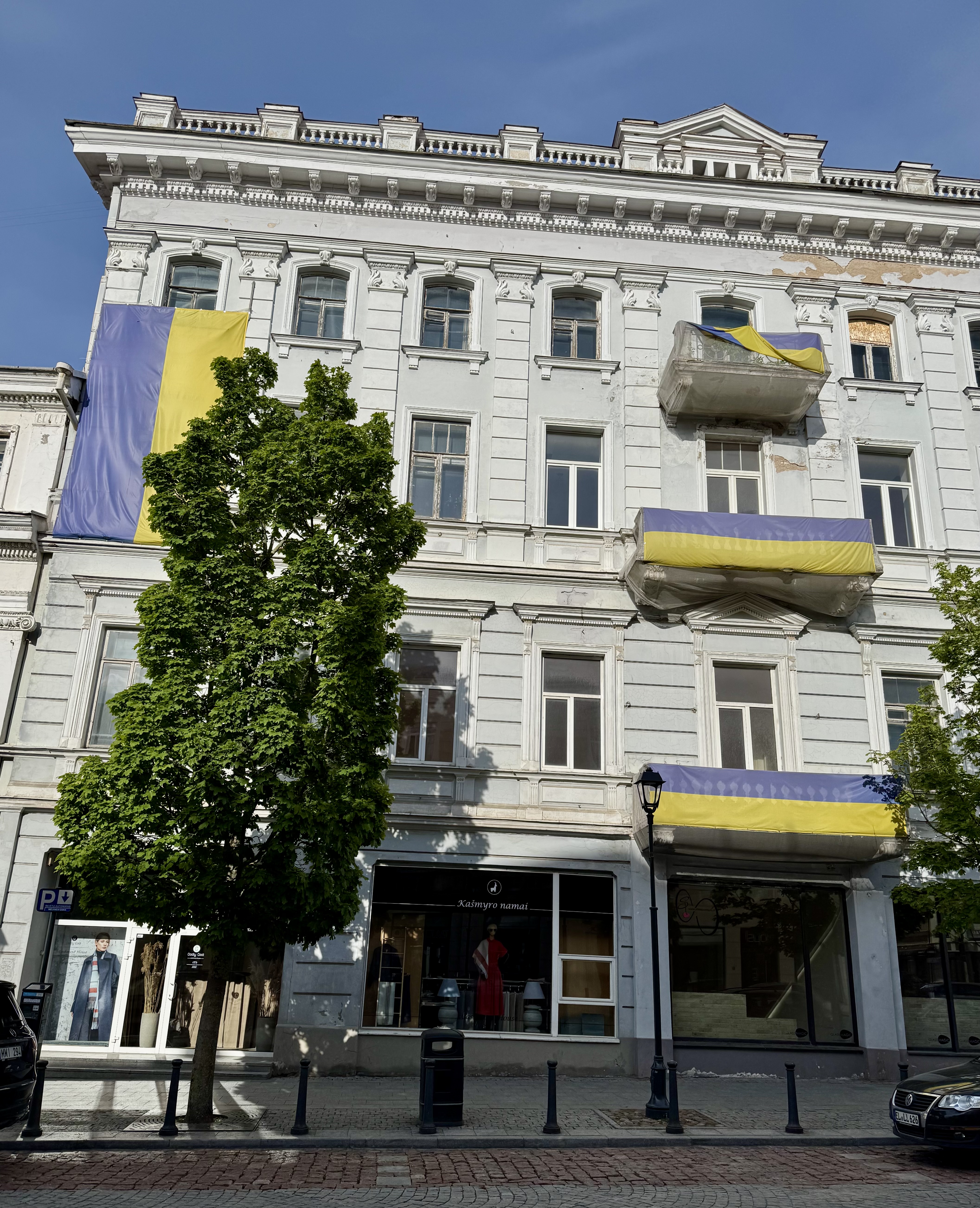
In Tallinn, As in Vilnius and Rīga, Ukrainian flags fly. The Russian embassy is protected around the clock by police. A barricade is plastered with posters supporting Ukraine.
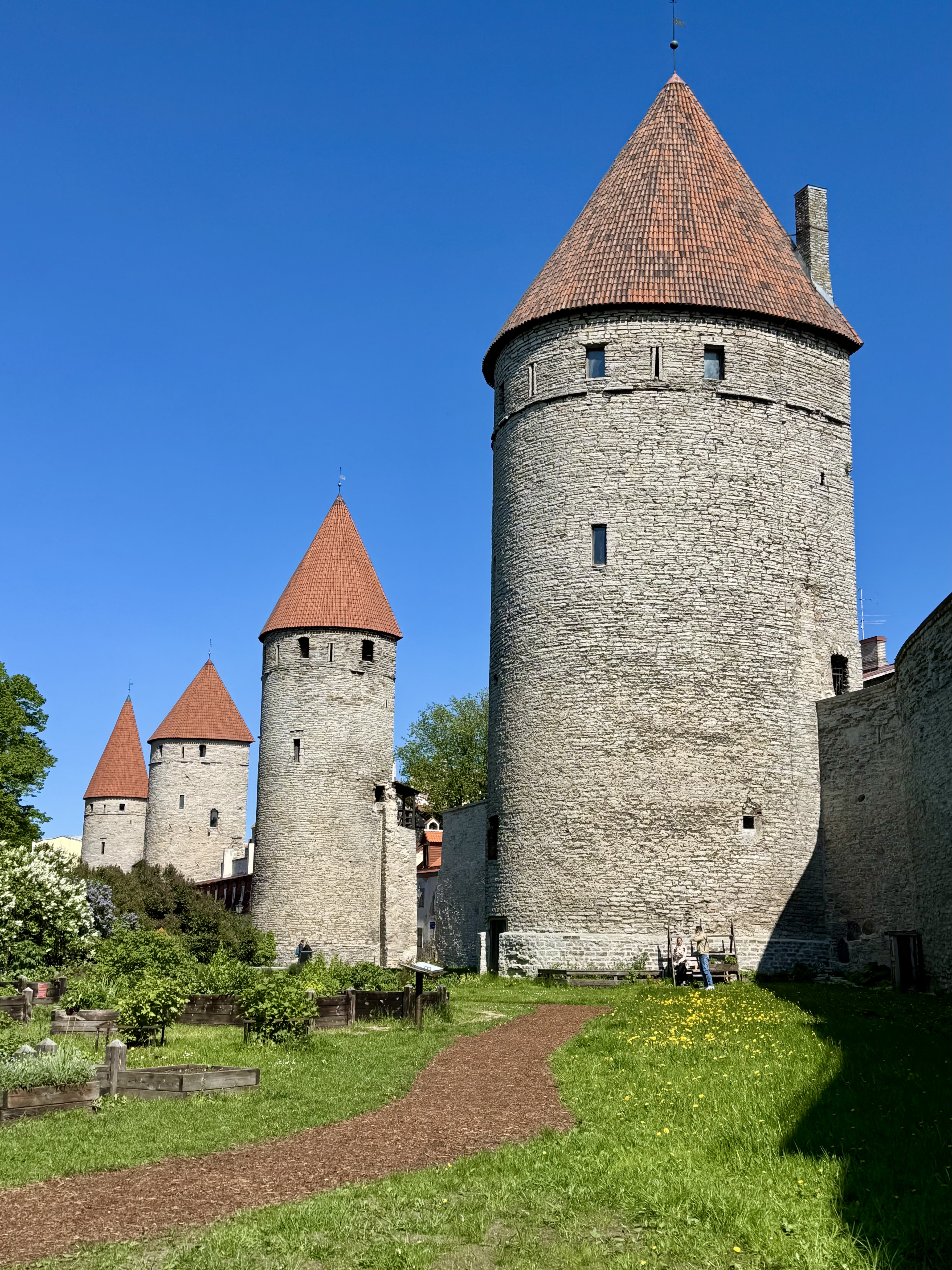
Tallinn, founded in 1248, has one of the best-preserved medieval old towns in northern Europe and is, like Vilnius and Rīga, a UNESCO World Heritage Site. It has most of its original city wall and twenty-six of its original forty-six towers.
I visited Tallinn in 2016 and shared my impressions here. On this trip, I explored further.

After our orientation tour, Leslie and I stepped outside of the old town walls to visit the Baltic Station Market, three floors of shops and restaurants next to the train station.
The new complex replaced the market and station from the 1800s—which replaced a shelter for the “apparently dead” on the road to the cemetery.
Taphophobia is the fear of being buried alive as a result of being incorrectly pronounced dead. During the 1800s, the media spread stories of such cases and stoked fear in the population.

Tales were told of noises emanating from inside of caskets, and of corpses found with fingertips scraped raw and faces contorted in terror. Edgar Allan Poe published “The Premature Burial.” Funeral directors offered “safety coffins” with tubes for breathing and bells for signaling.
For a fee, Talinners could check their apparently dead relative into the holding facility, just in case the deceased might awaken later. There is no record of this ever occurring. Instead, citizens discovered the building manager was renting beds by the night to travelers.
Bugged
We climbed 258 stone steps through a claustrophobic spiral stairwell to the viewing platform below the Church of Saint Olaf’s steeple. With its spire, the church is nearly thirty-four stories tall.
Saint Olaf was built in the 1100s and was once (supposedly) the tallest building in the world. From 1944 until 1991, the KGB used the church’s spire as a radio tower and surveillance station.
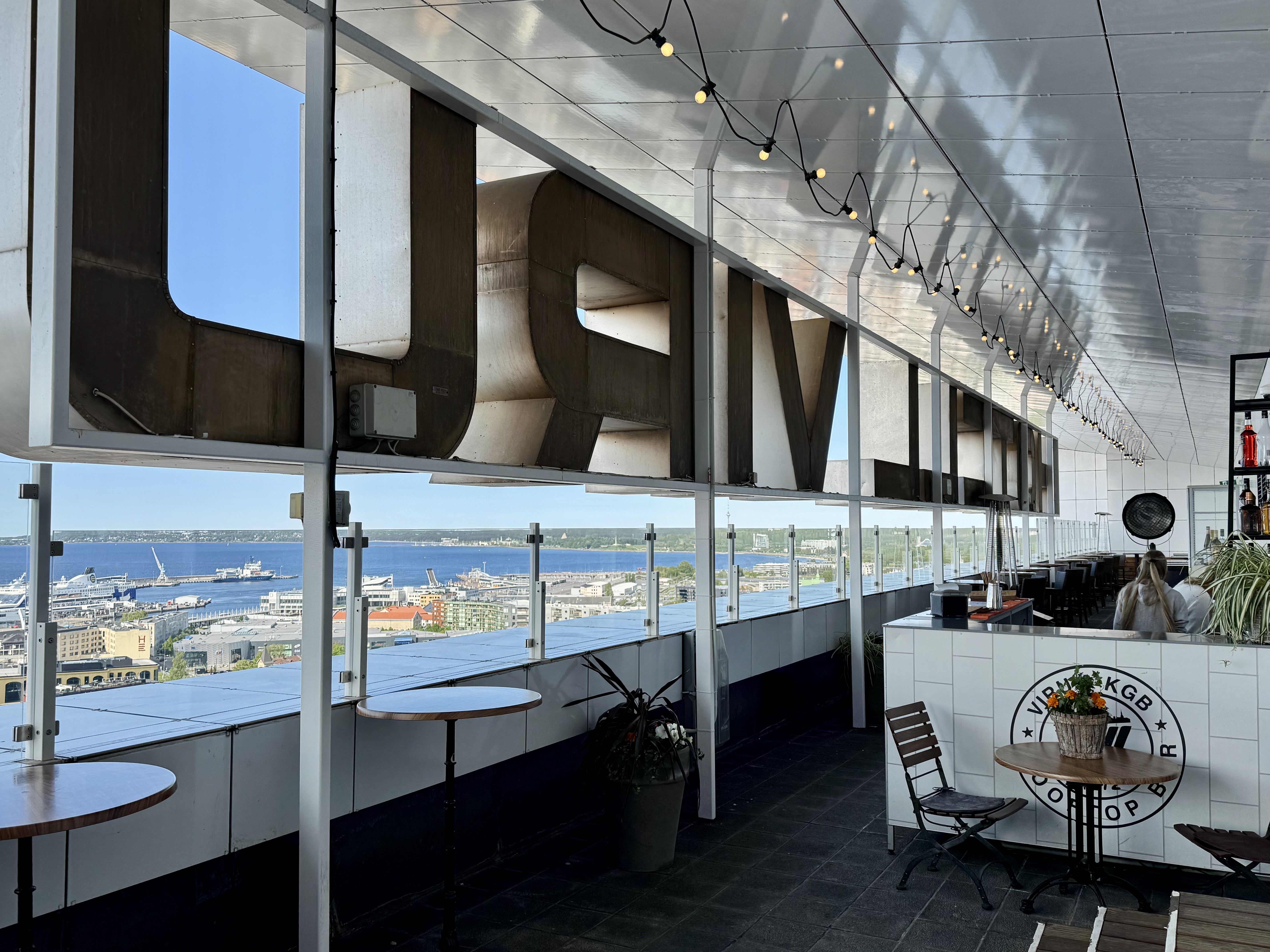
For another KGB view, we visited the twenty-third floor of Hotel Viru, Estonia’s first modern high-rise building. The hotel, seemingly right out of a Cold War spy movie, was the only place foreigners could stay. The KGB, of course, wanted to eavesdrop on the guests’ conversations. Sixty of the hotel’s rooms were bugged, as were some of the restaurant’s tables. The top floor contained a secret listening center.

The KGB left the hotel in 1991 just before Estonia became independent, but the hidden listening rooms weren’t found until 1994. The former spying center is now a museum.
Singing revolution
Despite Soviet efforts to Russify the Baltics, the ethnic populations clung tightly to their dreams of independence.
Then, in 1985, a crack in the Soviet facade appeared. Mikhail Gorbachev, president of the U.S.S.R., introduced policies of glasnost (openness) and perestroika (restructuring) in order to encourage productivity in the Soviet federation. It backfired.

As restrictions on personal freedoms were lifted, hundreds of thousands of demonstrators took to the streets. There was no turning back.
The tipping point in Latvia occurred during the Song and Dance Festival of 1985. A song that expresses longing for a free Latvia was banned from the program by the Soviets, as was the choir conductor, Haralds Mednis. However, at the choir’s insistence, Mednis was pulled from the audience to lead the singing of the forbidden song—on live TV.
In June 1988, three hundred thousand Estonians, around a third of the country’s population, gathered at Tallinn’s Song Festival Grounds. For five consecutive nights, they held hands, sang forbidden songs (“I am Estonian and I will remain Estonian”), and waved their outlawed flag until daybreak.
In August 1989, a massive protest involving two million people dramatized the deep desire of the Baltic people for freedom.

Demonstrators from all three countries formed a 360-mile-long human chain linking the capitals of Lithuania, Latvia, and Estonia. The inspirational stories of the Singing Revolution and the Baltic Way have been told in moving documentaries, here and here.
In 1991 all three countries declared full independence from the Soviet Union. Iceland was the first country in the world to recognize their sovereignty. The Soviets withdrew their last troops in August 1994.
Finally, the Baltics were free.
 YearTripper