
Twenty-three years ago my dad, brother, kids, and I joined a big-bus tour of central Europe. One of our stops was the city of Prague, capital of Czechia, where we spent two nights. I always hoped to return and explore it more fully. Recently I did.
My first stop was Tourist Central—Prague’s Old Time Square. At 8 a.m the streets were pleasantly empty, except for a few delivery trucks and street sweepers.
The square, one of Europe’s grandest, is surrounded by architectural masterpieces of every style. Prague escaped much of the continent-wide destruction of World War II.
Some of the more prominent buildings on the square were built in the 1300s, such as the Old Town Hall and the Church of Our Lady before Týn. Saint Nicholas Church was constructed on the site of a previous church, dating to the 1200s. Toward the end of World War II, Saint Nick’s was the underground home of Radio Prague.

In the center is the enormous memorial to Jan Hus, a theologian and preacher whose ideas about reforming a corrupt church predated Martin Luther by a hundred years. Hus’s accusations, however, were poorly received by the church hierarchy. He was burned at the stake in 1415.
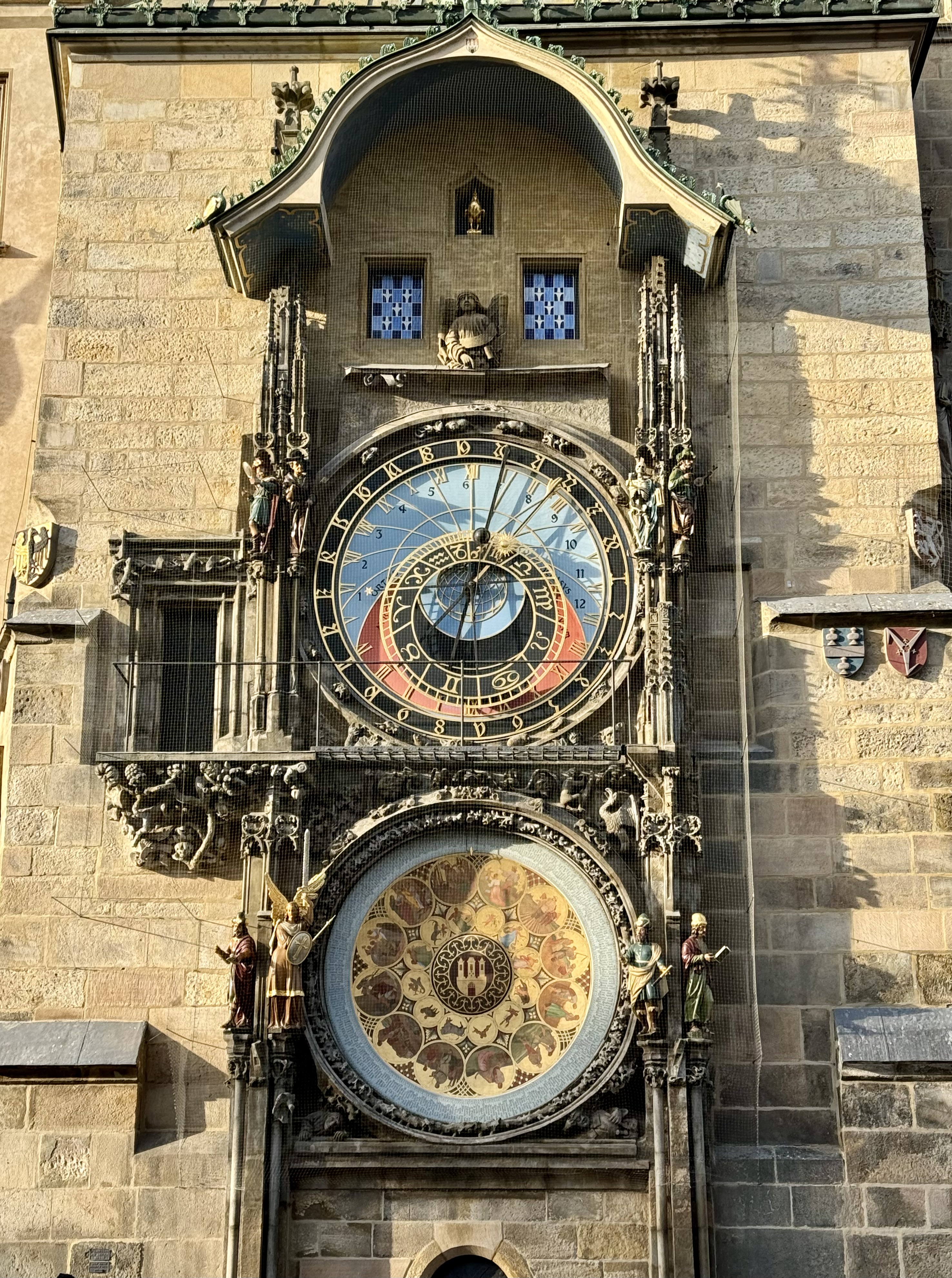
The big draw in the square is the marvelously complex clock, installed on the side of the Old Town Hall in 1410.
The clock has two huge faces surrounded by animated figures representing vanity, lust, greed, and death. The apostles put in an appearance every hour and a golden rooster crows.
But shortly after its unveiling the clock was cursed—and stayed that way for most of a century.
Continue reading YearTripper