Queuing for survival

Revolution. Castro. Communism. Bay of Pigs. Soviet Union. Khrushchev. Missile Crisis. Cold War. Embargo.

Trinidad CU

These incendiary buzzwords formed my earliest impressions of the country of Cuba.

They were shared with me during my teen years by civics teachers, politicians, and the media. Communism was evil, I came to understand. So was Cuba’s revolutionary leader, Fidel Castro. 

He dared to disengage from the suffocating imperial embrace of the United States and form a bond with the evil Soviet Union. The Soviets were, of course, delighted to gain a foothold in the western hemisphere.

The situation came to a head when the Soviets moved nuclear missiles into Cuba and pointed them at us. Through nerve-racking diplomatic efforts, President Kennedy managed to defuse the threat. Still, the Soviets were now embedded on the island. The U.S. retaliated by imposing a crippling trade embargo.

Thirty years later the Soviet Union dissolved. Sixty years later, the U.S. embargo is still in place.

Popular perceptions notwithstanding, visiting Cuba is neither difficult nor illegal. My former college roommate and longtime friend, Craig, suggested we give it a go.

We took advantage of a license by the U.S. government allowing travel to the island. Authorized reasons range from the humanitarian to the artistic, from the religious to the athletic. The category under which we qualified is called “support for the Cuban people.”

Only later did I understand what that meant.

Continue reading
Where continents collide

Istanbul, not Constantinople.
Now it's Istanbul, not Constantinople.
Been a long time gone, Constantinople.
Why did Constantinople get the works?
That's nobody's business but the Turks.

They Might Be Giants

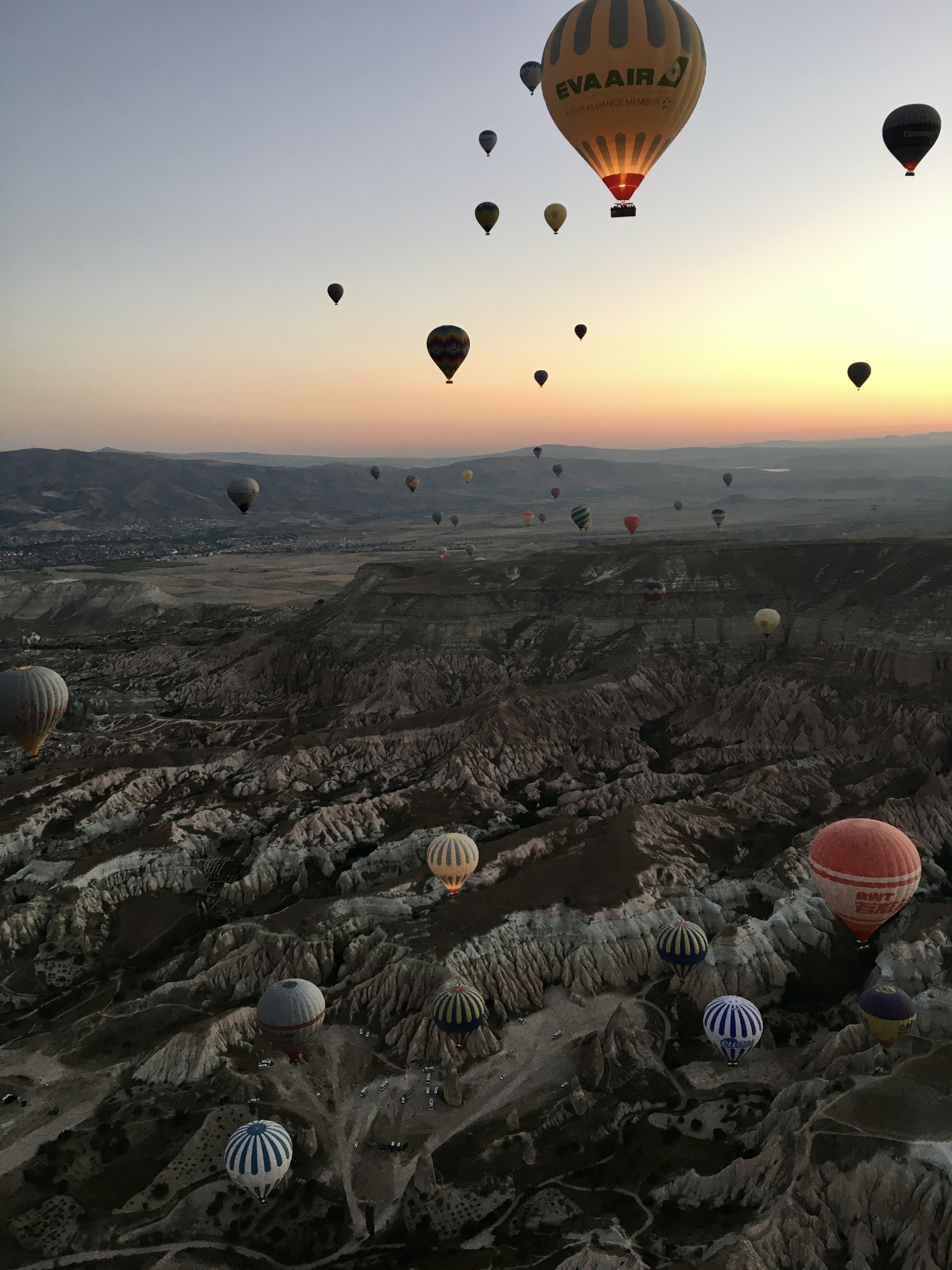
Our group of fourteen met in the unlit courtyard of the hotel, shivering against the chill and questioning our resolve.

At five a.m. a white passenger van arrived. We clambered inside, glad for the communal warmth.

The driver spoke no English. He distributed bags of packaged breakfast snacks—croissants, energy bars, and cartons of fruit drink.

The van jolted over stony single-track roads during the half-hour ride to the launch site. Occasionally, the headlights of other vehicles flashed through the windows, but I could see nothing outside. No lights, no moon.

Göreme Valley, Cappadocia TK
Göreme Valley, Cappadocia

We left the outskirts of Mustafapaşa and eventually descended into a long valley, where numerous vehicles were parked in fields along the sides of the road. Occasionally, blue flames flared in the distance.

Finally, the van stopped and we climbed out, stumbling over rocks in the dark. Nearby, a gigantic nylon sheath sprawled on the ground like a collapsed circus tent.

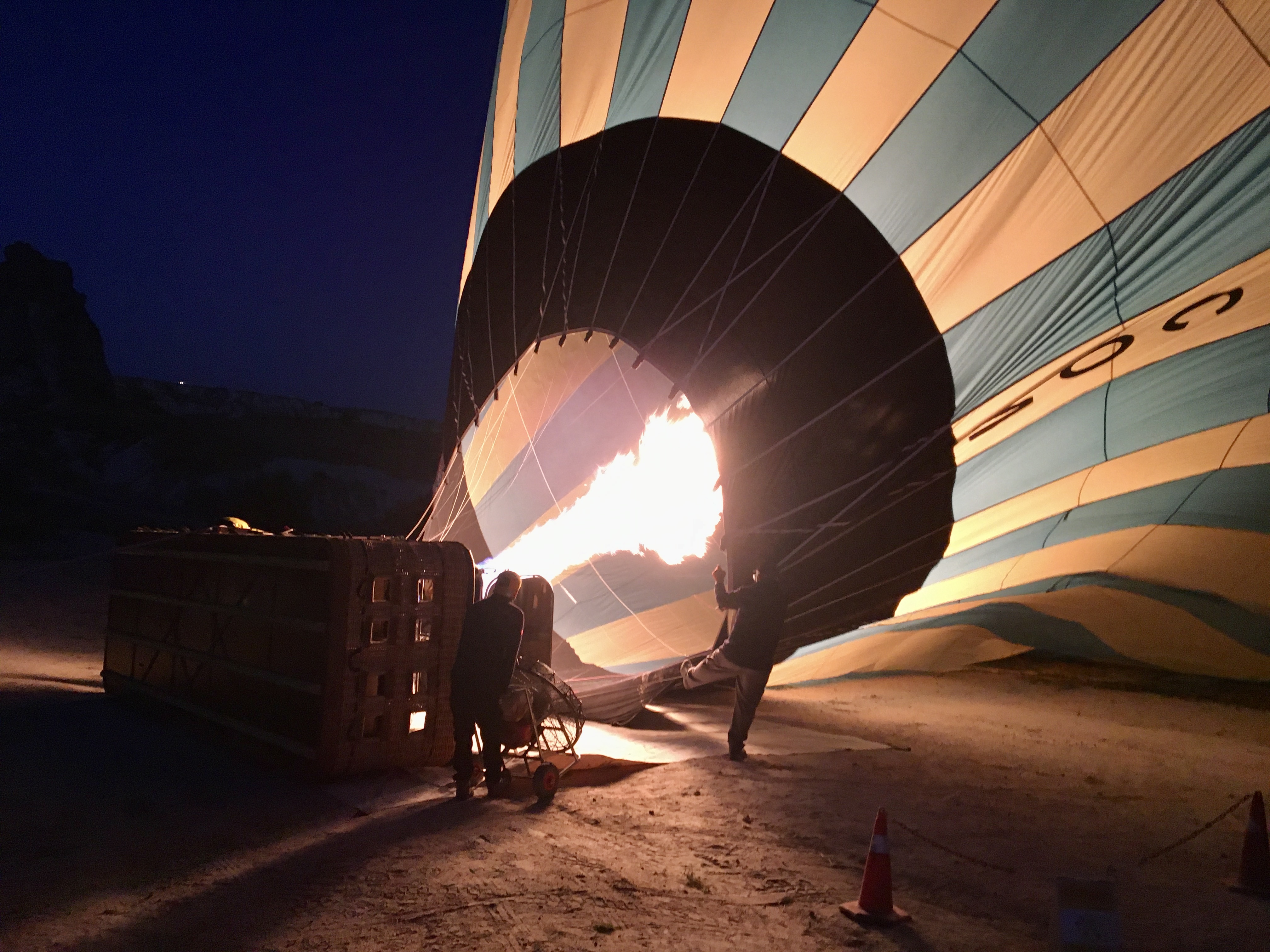
The crew stretched it out and positioned powerful fans in front of an opening. A bubble began to form. Crew members crouched inside of it, tugging on cords, kicking open the folds.

As the pouch slowly filled with air, it wallowed on the ground. The fans were replaced by propane burners, which shot long tongues of flame into the balloon’s cavity.

The bursts illuminated the inside of the sack and it began to resemble a huge incandescent bulb lying on its side.

Göreme Valley, Cappadocia TK
Göreme Valley, Cappadocia

The process was repeated in the fields around us, as dozens of limp bags glowed internally and intermittently like fireflies.

In the beams of vehicle headlights, our crew tilted a wicker basket and attached it to the swelling balloon.

We climbed into the basket’s compartments, each of which fit just two or three of us. In total, the gondola held thirty people—twenty-eight passengers and two crew. Surely, it was too much weight.

Our balloon was tethered to an off-road vehicle. By the light of the burners, I could see the ground crew studying our situation. Then, I realized they were looking up at us. Somehow, imperceptibly, we had risen.

Göreme Valley. Cappadocia TK
Göreme Valley. Cappadocia

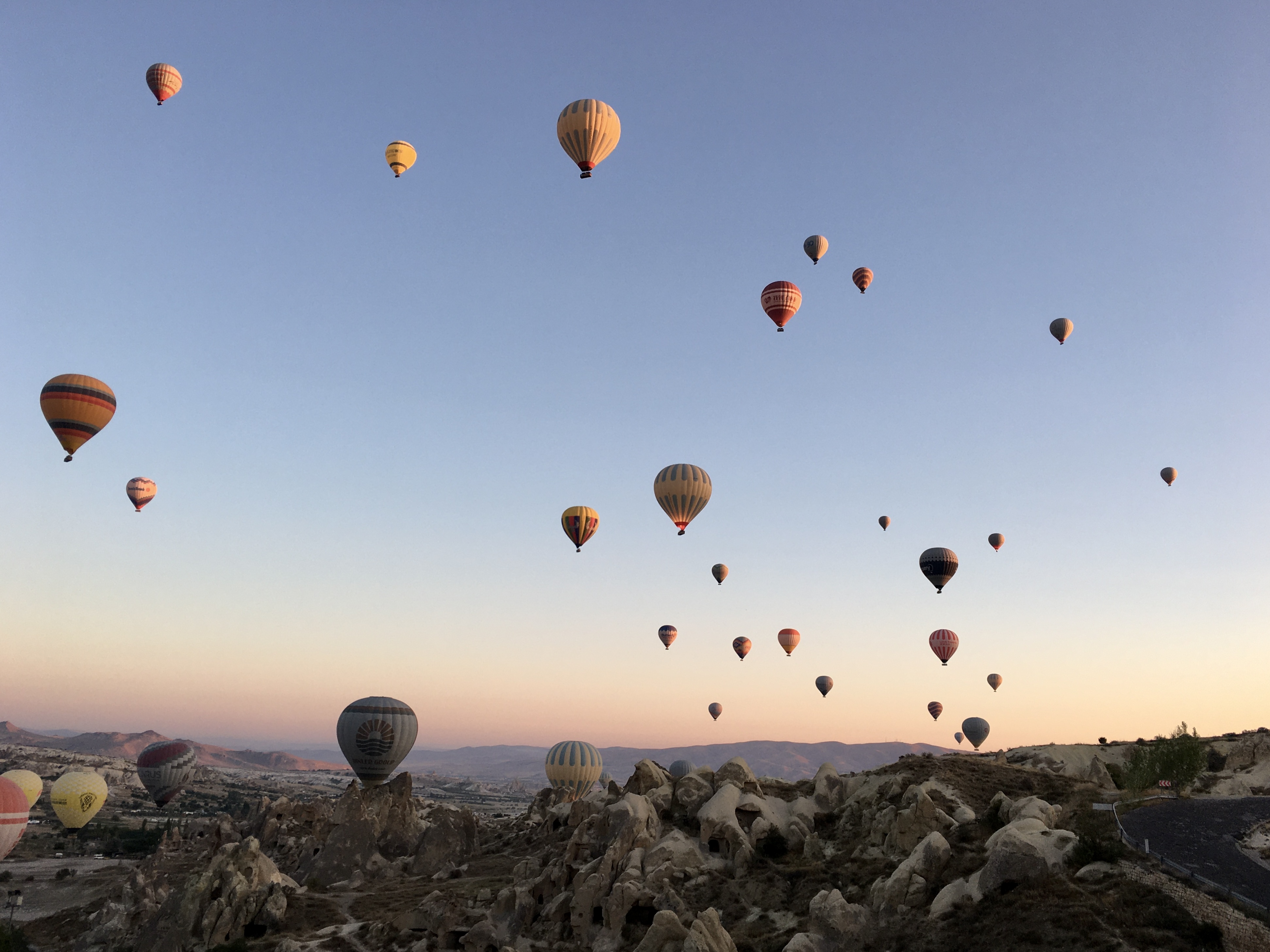
It was time to release our hold on earth. The pilot dropped a ballast bag to the ground and fired the burners. The tethers were untied. Slowly, gently, and with the roar of the burners in our ears, we ascended. We were free.

The day before I asked our tour guide, Volkan, if he would be joining us. “No,” he said. “I will be in my room praying.”

Continue reading

Legends of Lusitania

Ribeira District, Porto PT
Ribeira District, Porto

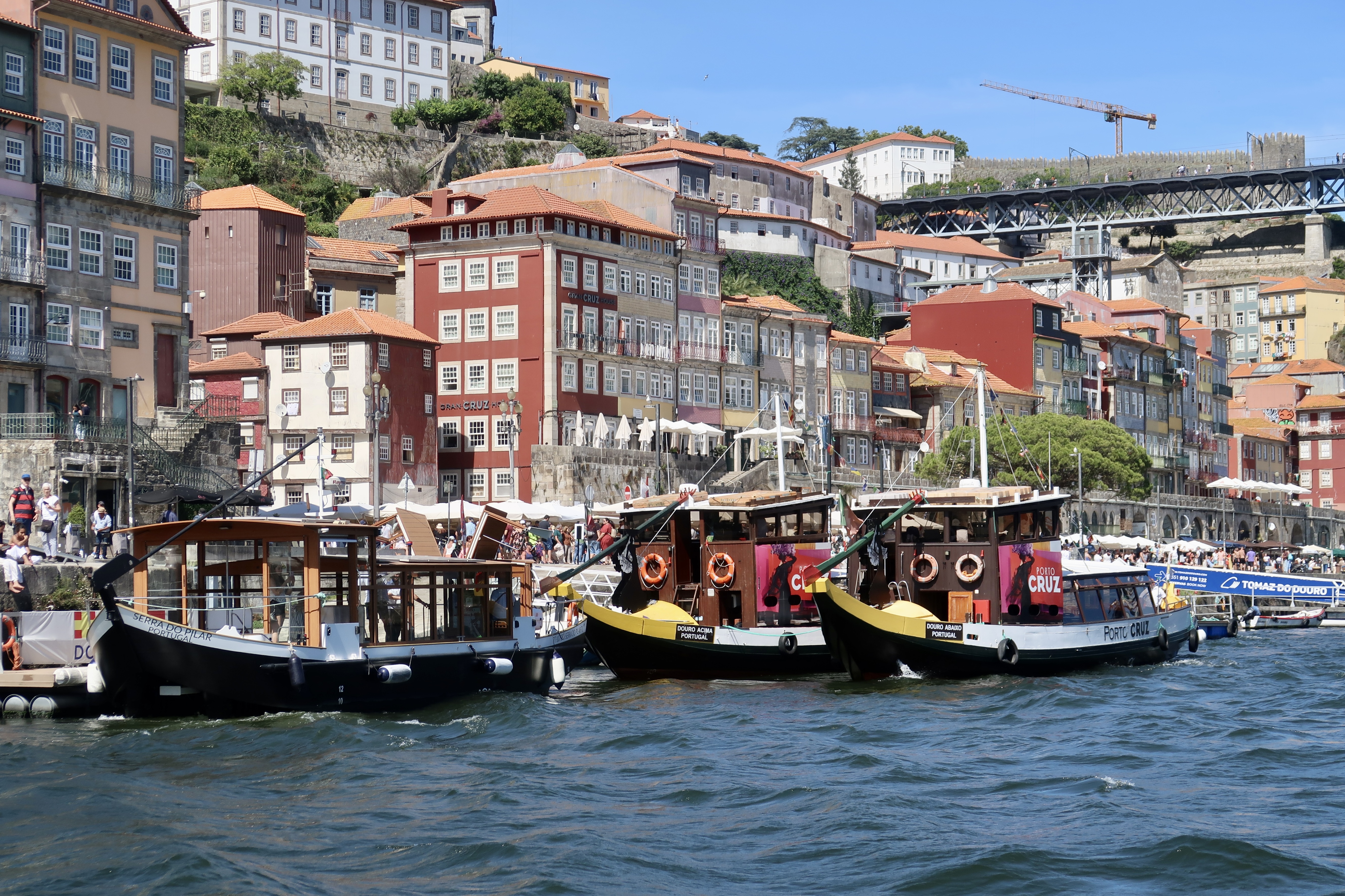
In 1178 the first king of Portugal built a magnificent Gothic church in the city of Alcobaça (ahl koh BAH sah) to commemorate his victory over the Moors.

The church evolved into a monastery, now home to the tombs of King Pedro I and his murdered mistress Inês, and to a tale of young love gone gruesomely creepy.

Here’s the story: In 1340, Pedro’s father, King Afonso IV, arranged a politically strategic marriage for his son. Pedro instead fell in love with his new wife’s lady-in-waiting, Inês de Castro.

Pedro’s father did not approve of the prince’s affair and exiled Inês. A few years later, Pedro’s wife died. Upon hearing the news, Inês returned to Portugal, moved in with Pedro, and bore him four children.

Afonso thought Inês’s influence presented too much of a threat to Pedro’s legitimate son and heir to the throne. In 1355, the king had Inês murdered.

A grief-stricken Pedro sought revenge against his father and sparked a civil war within Portugal. Upon Afonso’s death in 1357, Pedro became king. Then things got weird—Pedro installed dead Inês as his queen.

Continue reading

On the Marrakesh Express

Barbary macaque, Morocco

With local guide Mohamed, we crossed the dry bed of the Ounila River and entered the historic village of Aït Benhaddou in Morocco. A UNESCO World Heritage Site, the hill town has existed since the 1000s.

Aït Benhaddou was once an important stop on the caravan route across the Atlas Mountains between the Sahara and Marrakesh.

Today, the walled village is inhabited by only a few families.

We visited one of the residents, a widow who has lived in Aït Benhaddou for thirty years. Upon our arrival, she poured glasses of hot mint tea for us—the traditional Moroccan ritual of hospitality.

A donkey stood with its head inside of the front door slurping water from a bucket. A small herd of goats was penned in one of the home’s stone-floored rooms. In the living area hung a movie poster from Gladiator.

Continue reading

A fortnight in Provence

Villefranche-sur-Mer FR
Villefranche-sur-Mer

After a night of partying on a yacht in the harbor at Villefranche-sur-Mer, three young couples decided to come ashore for breakfast.

They tied their dinghy up to a small dock and chose a café on the promenade. They ordered espressos, croissants, and champagne.

On a dare, one of the young women ran to the end of the dock and dove into the harbor. Her companions cheered. Not to be outdone, her boyfriend followed suit.

As they clambered dripping onto the dock, an employee of a harbor-cruise company informed them diving from the company’s dock and swimming in the harbor were not allowed.

The boyfriend resented being told what he couldn’t do. The two argued. Quickly, tempers flared.

The boyfriend shoved the cruise employee into the water. His mates pulled him out and confronted the partiers. A larger fight erupted between the two groups, as punches were thrown by both sides.

Continue reading

A lot of Gaul

Roman gate, Reims FR
Porte de Mars, Reims

On the first day of my high-school Latin class, Mrs. Duncan declared (as did Julius Caesar before her), “Gallia est omnis divisa in partes tres.” Translation: “Gaul is a whole divided into three parts.”

Gaul? It was Greek to me.

Caesar conquered the three parts of Gaul between 58 and 50 BCE. Millions were killed or enslaved during the invasion.

The region known to Caesar as Gaul is now France, Belgium, and parts of Italy, Germany, and Switzerland.

The conquerors and the conquered proceeded to romanize the place. On a recent visit to France, I saw lots of evidence of their public projects.

My first stop was Reims (pronounced to rhyme with taunts), a city in the former province of Champagne in northeast France.

Founded around 18 BCE by a Gallic tribe, Reims became the second largest city in Roman Gaul with a population of over fifty thousand. Its residents enjoyed numerous amenities, including an aqueduct, marketplace, arena, theater, temples, and baths.

Nothing remains of these monuments above ground, except the mammoth Porte de Mars, the last remaining entry gate into the city. Below the surface, however, it’s another story, best told while the champagne chills.

Continue reading

Channeling flannel

Pole climbing, Lumberjack World Championships
A shanty man’s life is a wearisome one,
Although some say it’s free from care.
It’s the swinging of an axe from morning ‘til night
In the forest wild and drear.

George W. Stace

In June the city is flush with anglers, kayakers, and canoeists, celebrating the Musky Festival.

Later in the year, over two thousand off-road cyclists jam-pack Hayward for the Chequamegon Mountain Bike Festival. The race traverses ski trails and forest roads.

But the one event most true to the city’s roots is held in July. That’s when lumberjacks and lumberjills from around the world flock to Hayward for the Lumberjack World Championships.

The plaid is wall-to-wall.

Continue reading