Fault lines of history

Dubrovnik, Croatia
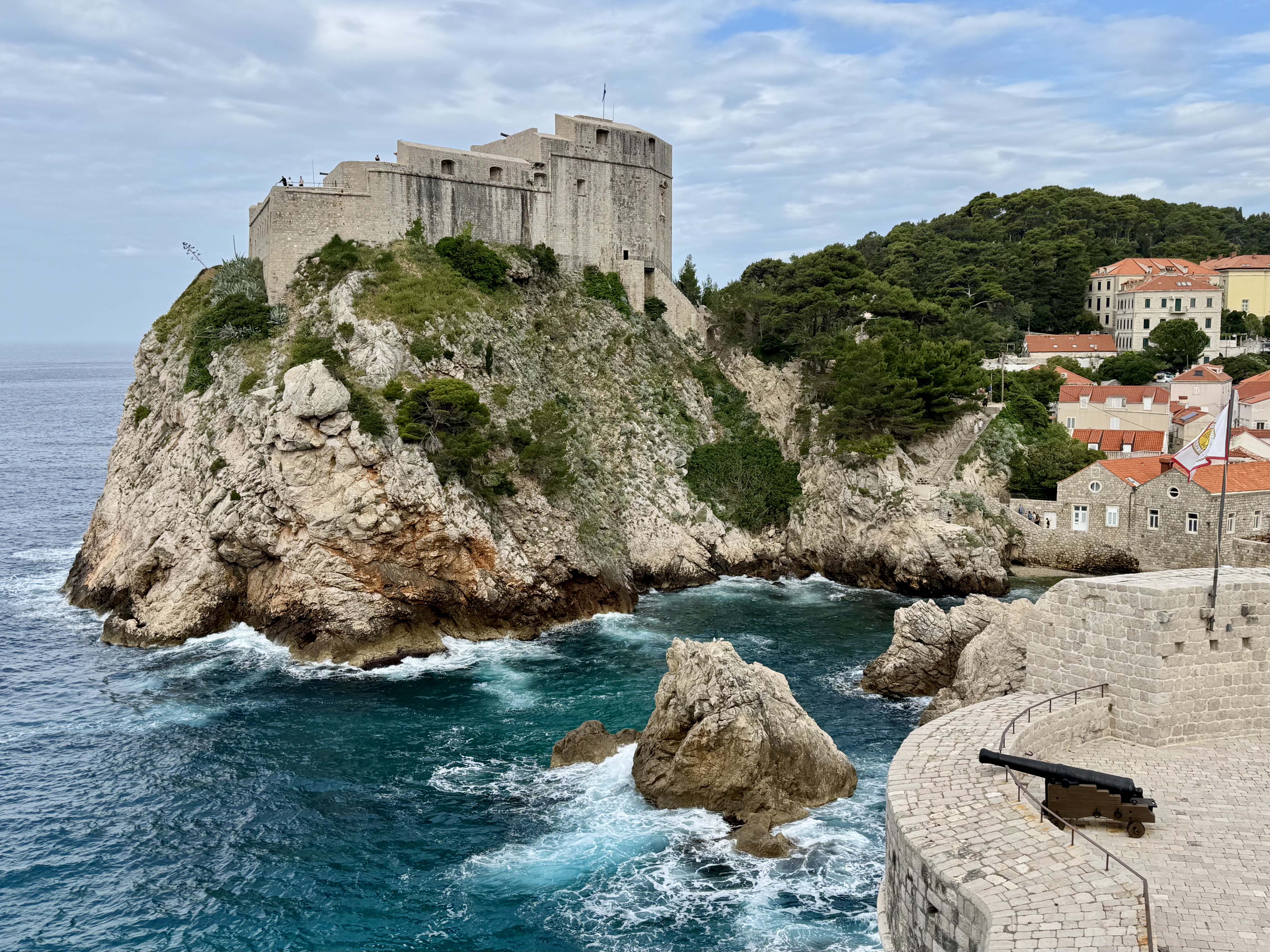
Saint Lawrence Fortress, Dubrovnik, Croatia

In 2011, a fifteen-centuries-old fortress in North Macedonia again became the scene of a clash.

On one side of the dispute were North Macedonians who make up approximately sixty percent of the country’s population. Many are Orthodox by faith. On the other side were ethnic Albanians, composing a quarter of the population. The Albanians identify as Muslims. 

The issue? The government of Skopje, the country’s capital city, had recently approved the restoration of an Orthodox church within the grounds of the fortress as a museum. The church’s foundations, dating to the 1200s CE, had been uncovered by archaeologists.

Anticipating objections to the project, the government sneakily hired out-of-town workers and instructed them to begin work under cover of darkness. 

The Albanians were paying attention. No sooner had the work started than a crowd of a hundred Albanians converged upon the work site, stopped the construction, and vandalized the scaffolding.

Continue reading
Golden aging in Athens

Acropolis, Athens
Acropolis

To read about my time in Crete, Santorini, and Naxos, please see the previous post, “Cycladean Rhythm.”

At five hundred feet high, the Acropolis can be seen from everywhere in Athens, including from our hotel room. The weather was perfect and the crowds thinning during our late afternoon visit.

The rocky mesa on which the Parthenon sits was the mecca for several civilizations prior to the ancient Greeks. Homer references the fortifications in the Odyssey. The goddess Athena, the city’s namesake, was worshipped here at least as early as 800 BCE.

The city-state of Athens was invaded by Persia (now Iran) a few times. The decisive battle during the 490 BCE incursion took place at the port of Marathon. The two forces were locked in a stalemate for five days until the Athenians, outnumbered three to one, outmaneuvered the Persians and won.

A courier, Philippides (also spelled Pheidippides and Phidippides) supposedly ran from Marathon to Athens to report the victory before collapsing and dying. His feat is the inspiration behind modern marathon races of 26.2 miles.

But there is more to his story—maybe.

Continue reading

Cycladian rhythm

Samaria Gorge, Crete
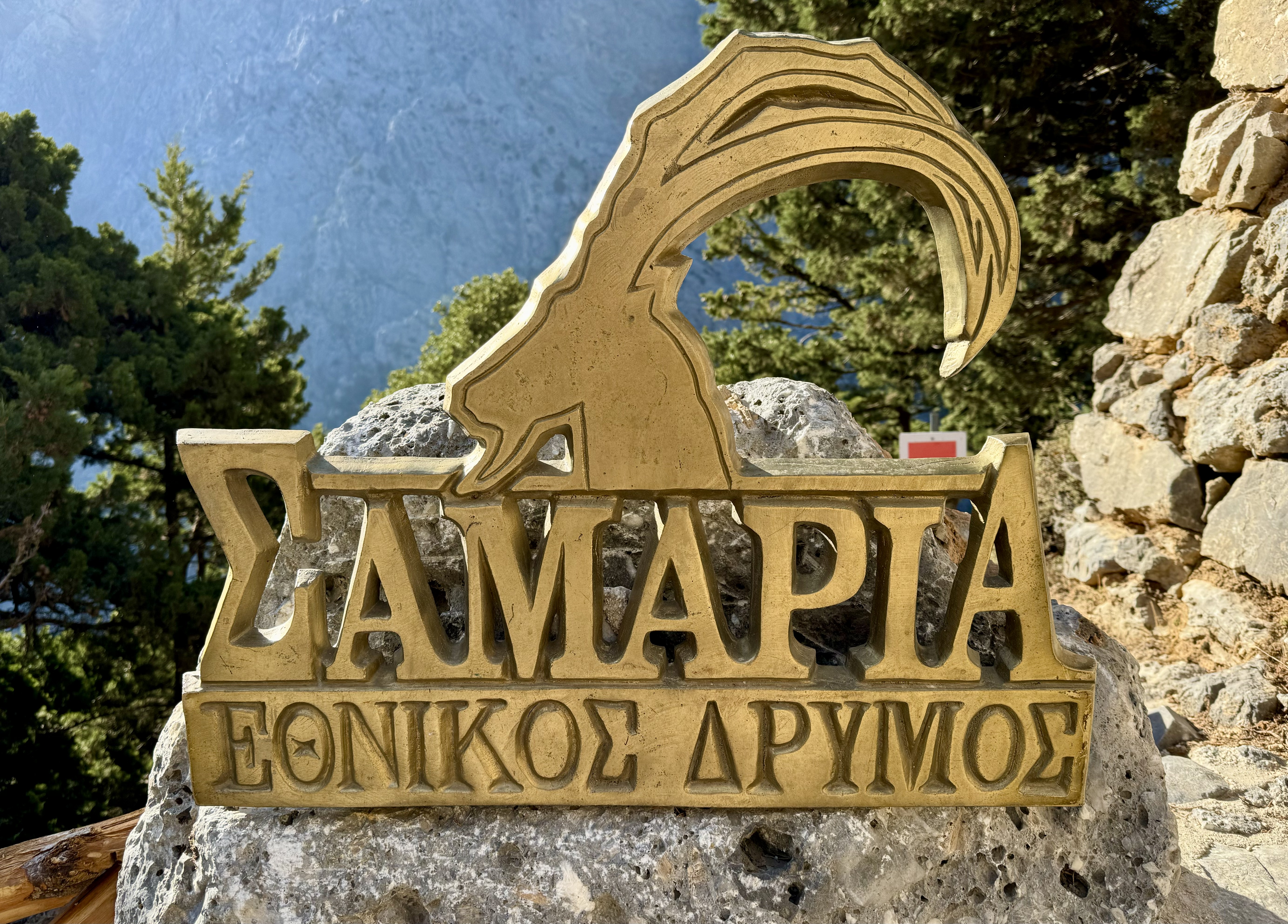
Trailhead, Samaria Gorge, Crete

The White Mountains on the island of Crete are bare of vegetation; thus the name. They are a moonscape of limestone.

The range has more than thirty summits over sixty-five hundred feet.

Concealed among the mountains are over fifty gorges, the most famous being the Samaria Gorge. At nearly ten miles, Samaria is the longest canyon in Europe. Since ancient times, people have hidden in the gorge from invaders or holed up between rebel skirmishes. 

Today, it is the hideout of the rare kri-kri, the Cretan goat. The kri-kri was the only meat available to mountain guerrillas during the Nazi occupation of World War II. The goats were once common throughout Greece, but now one of their last preserves are the almost vertical three-thousand-foot cliffs within Samaria National Park.

Samaria Gorge, Crete

At 7:45 a.m. Leslie and I boarded a bus and left Chania for the northern entrance of the gorge. Outside of town, the bus began climbing through farmland and forests. The peaks of the mountains were obscured by clouds. Once above the tree line, sheep and goats huddled in the road. Each time, the bus stopped and honked until the herds moved.

The bus labored up the narrow road, switchback after switchback. An hour later we were at Xyloskalo, where we were required to present passes to enter the trail.

A cold wind howled at the start, but once we climbed below the rim the canyon walls served as a shield. The gorge trail is all downhill, starting from an altitude of four thousand feet and ending at the village of Agia Roumeli on the Libyan Sea. Over nine miles in length.

Easy, right? Except that the descent is steep and the footing strewn with treacherous scree.

Continue reading