That state up north

Kimon
Bust of Athenian general Kimon

During football season, Buckeye fans in central Ohio sometimes refer to the state to the north as, well, “that state up north.” A much more serious version of this intentional slight is playing out on the island of Cyprus. On the plane to Larnaka, I sat next to a Cypriot woman who taught me a few Greek words. Hello, thank-you, and so on. She asked where on the island I was planning to visit. When I mentioned a couple of towns in the north, her face darkened. “You mean the occupied territory.”

Cyprus is a small island, roughly 150 miles from east to west and sixty miles from north to south. It is strategically situated at the far east of the Mediterranean Sea at the crossroads between Europe, Africa, and Asia. (Only sixty-five miles from Syria!) As a result of its central location, Cyprus was fought over and ruled by nearly every great empire—the Assyrians, Persians, Greeks, Phoenicians, Athenians, Egyptians, Romans, Byzantines, Knights of Templar, Franks, Venetians, Ottomans, and British—and I’m likely leaving a few out.

Continue reading
Rose, Hurricane Roger, and the 11,000 virgins

Cramer Park

The US Virgin Islands (USVIs) are like siblings—related by blood and separated by disposition. One is a popular socialite who wears glitzy jewelry and talks loud. One is laid-back and loves the outdoors. Another is an introvert with an abiding respect for history and culture. They are, in turn, Saint Thomas, Saint John, and Saint Croix (or, as nicknamed by the locals, Rock City, Love City, and Twin City).

I have a cousin who lives with her family on Saint Croix, the largest of the three. Before returning to Europe in the spring, I decided to accept her offer to enjoy island life for a few weeks.

Continue reading

The Saga of Sagitta (Part 2)

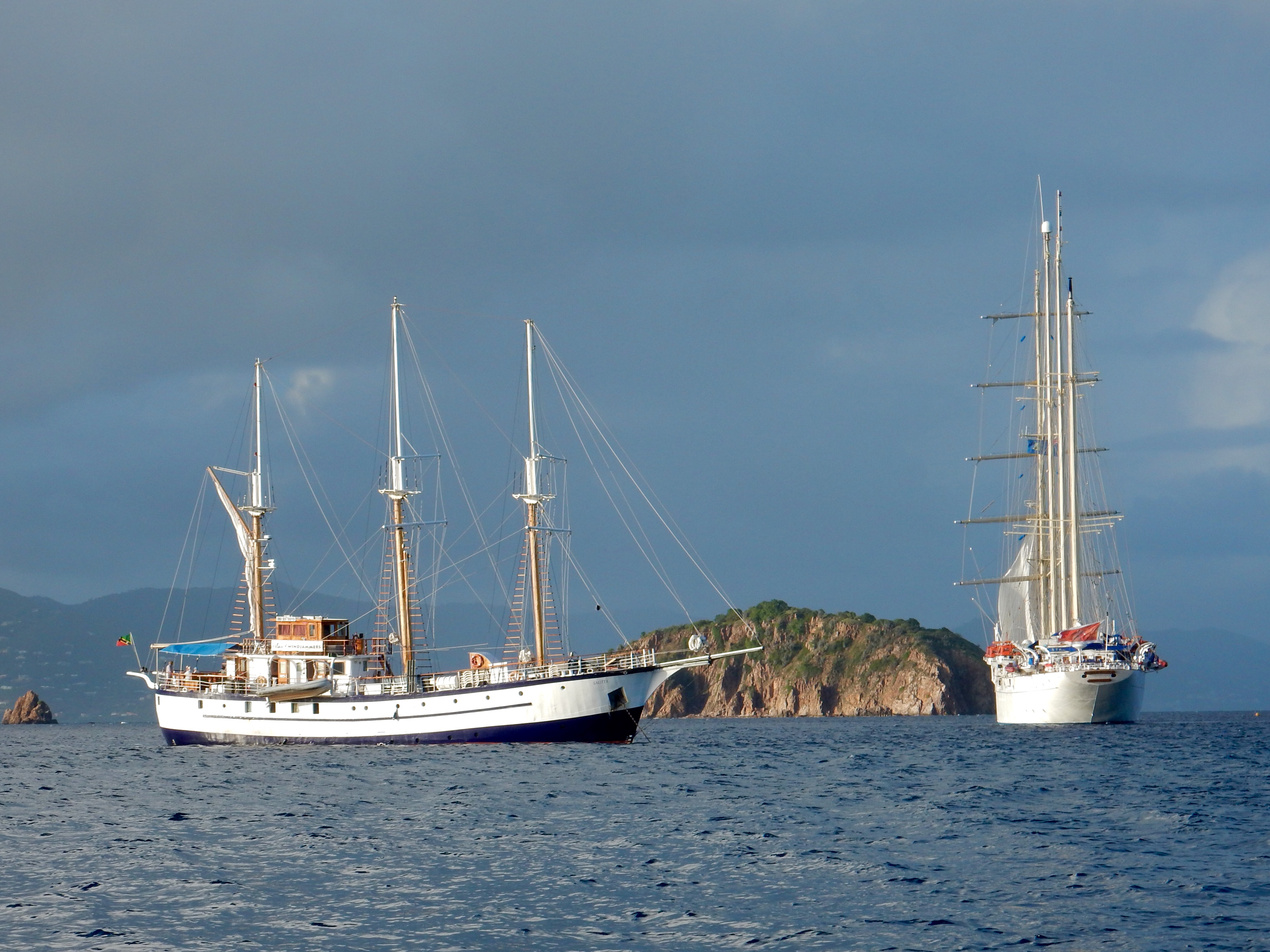
Sagitta and friend
Sagitta (left) and friend

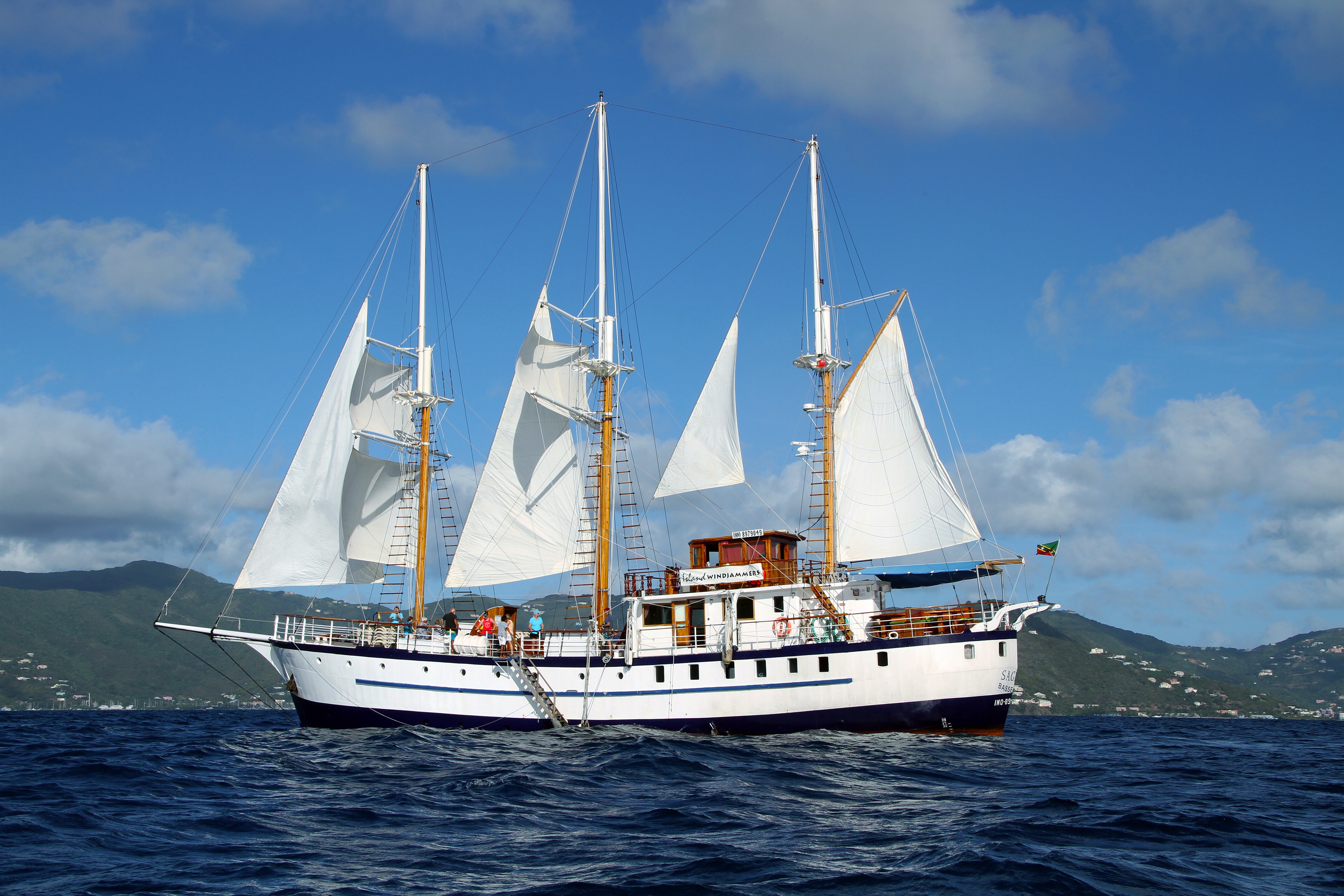
I’m at sea on a 120-foot three-masted sailboat, Sagitta, touring some of the Leeward Caribbean islands and feeling somewhat disconnected from the real world. To readThe Saga of Sagitta (Part 1),” please see the previous post.

Day Six: Sagitta sailed west from Marina Cay to Jost Van Dyke (pronounced YOST). The island may be named for the seventeenth-century Dutch privateer, Joost van Dyk, who used its harbors as a hideout. (A privateer is a mercenary, essentially a pirate paid by a government.) On the way the dinghy circled the ship a couple of times, allowing us to take beauty shots of Sagitta under full sail for our photo albums. I saw several sea turtles on the surface during the trip along the south side of Tortola.

Continue reading

The Saga of Sagitta (Part 1)

Sagitta
Sagitta

I was stuck in a fake tropical village built at the cruise-ship docks near Philipsburg, Sint Maarten. Four huge ships were parallel-parked, each spewing thousands of passengers into the gated duty-free jewelry stores and rum bars.

I had two hours to kill before boarding Sagitta, the 120-foot three-masted sailboat that would be my home for twelve days on a tour of some of the Leeward Caribbean islands. Time for a tab of Dramamine.

Continue reading

Beyond the guidebooks

Isle of Skye

I’ve been traveling solo for eighteen straight weeks, twelve of those in Scotland and Portugal. Along the way, I’ve learned a few things that aren’t in the guidebooks.

Never miss an opportunity to visit a restroom. You don’t know when or where the next one may appear.

If you are lost, tired, or need to regroup safely, duck into a library or church to gather your thoughts in quiet. Don’t be the confused-looking tourist on the corner with the open tablet or unfolded map. Libraries often provide free Wi-Fi, although in Scotland I had to apply for a library card first. Coffee shops and cafés work just as well, but you will be obligated to buy something.

Museums almost always have good restaurants and clean restrooms and you don’t necessarily have to pay admission to use them.

Continue reading

Laundry at the edge of the world

Cape St. Vincent, Sagres, Portugal
Cape Saint Vincent, Sagres

Where is the edge? Outer space perhaps?

In ancient times, the edge of the world was the southwestern tip of mainland Europe, Cape Saint Vincent in the western Algarve region of Portugal.

Several civilizations reached the cape, including the Phoenicians, Carthaginians, and Greeks. The Romans called it Promontorium Sacrum (Holy Promontory). From the cliffs, they watched the sun set into the sea, marking the extremity of the world as they knew it.

Continue reading